Author:Used Wholesale Manufacturer TIME:2026-10-23
A carton that accepts ordinary low-profile sneakers may close badly around used platform sneakers, even when the pair count is unchanged. Broad, raised sole outlines leave gaps that softer packing cannot simply remove. Before agreeing how many pairs belong in each carton, compare two physical arrangements: upright pairs and alternating pairs. The useful result is measured carton space per complete pair, with the shoes' shape preserved, not the largest count someone can squeeze inside.

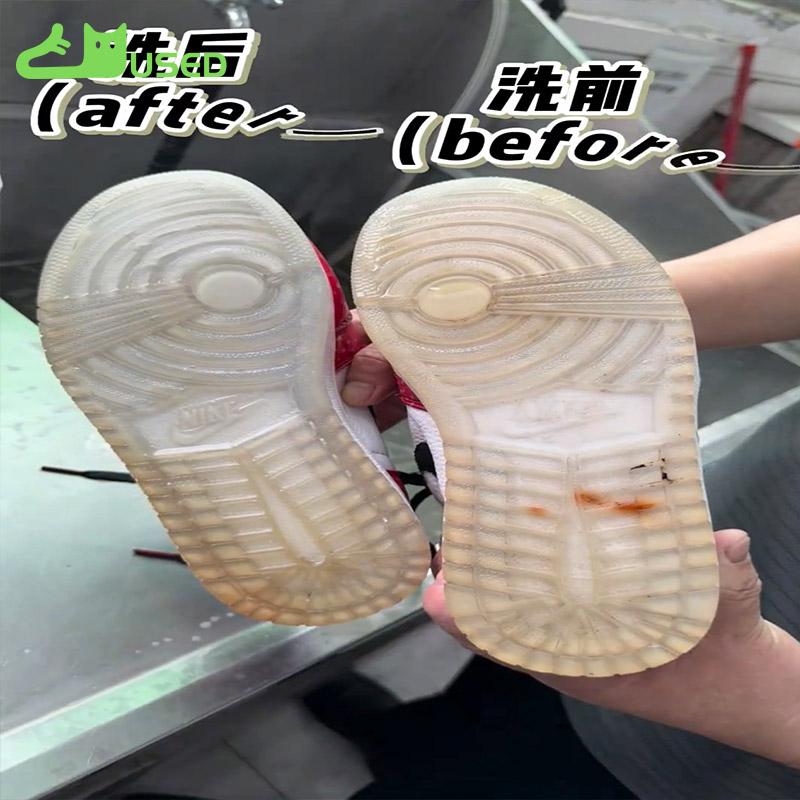
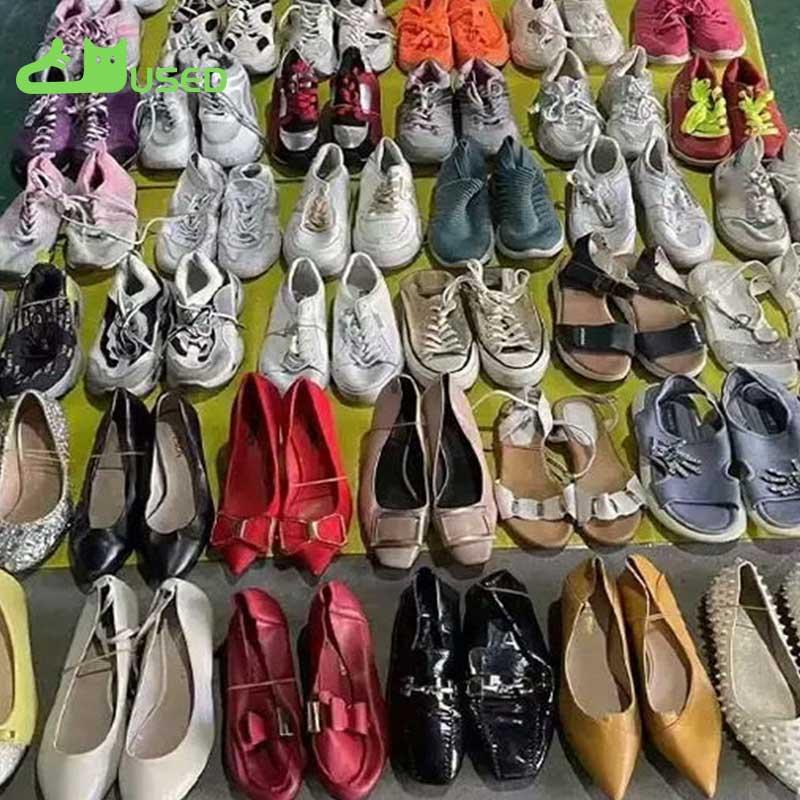
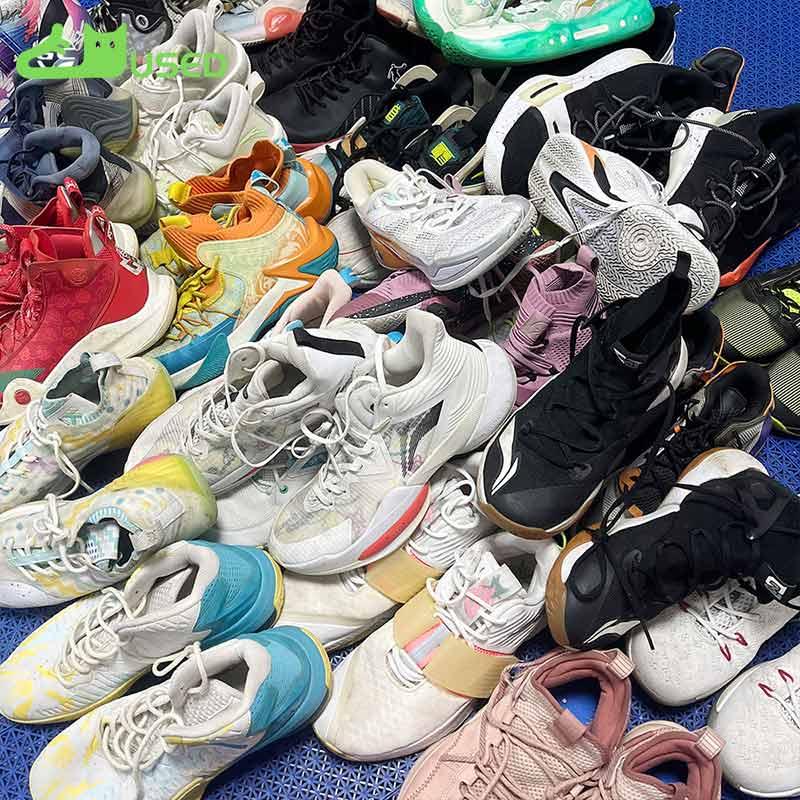
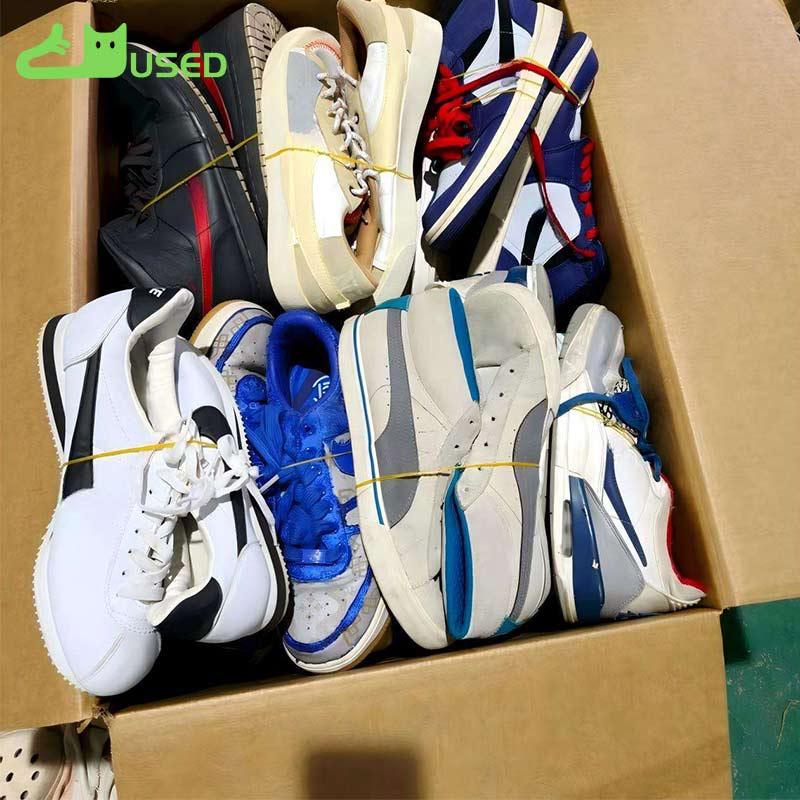
The paired and side photographs show a light sneaker construction with a substantial sole edge. They help explain why the outer outline matters; they do not establish a platform-height specification, available used stock, grade or authenticity. Ask for measurements of the actual offered pairs instead of converting the visible sole edge into centimetres.
Measure the longest, widest and highest points in the intended packing position, including any protruding heel or toe. Keep both shoes together during the trial. A single shoe's neat outline does not describe the space needed by its mate, protective separation and any agreed support.
Record the carton's actual inner length, width and usable height before packing, with units stated. These dimensions determine what can fit between the walls and beneath the closed flaps. A supplier's nominal carton size is not a substitute for measuring the carton used in the trial.
Measure the loaded outer dimensions separately. Carton walls and any outward bulge occupy space too. Note whether measurements describe a loose carton or a larger shipping unit, and retain photographs of the ruler positions. Do not describe an open carton as if its closed height had been checked.
Start with soles down and pairs side by side, keeping the toe direction consistent. Check where wide sole edges meet and whether the upper layer or closing flaps bear on collars. Record unavoidable gaps rather than filling them by bending a shoe.
Reverse the toe direction of adjacent pairs and see whether the broader toe and narrower heel outlines sit alongside each other more efficiently. Keep the same shoes and protection. Alternating is an option to measure, not permission to force one raised sole against another shoe's upper.

Where support is needed, use a fitted support that holds the intended shape without stretching the upper or pushing the collar outward. Separators should prevent unwanted contact without becoming wedges that crush adjacent shoes. Include their occupied space in both trials. If the lid needs extra force, reduce the contents or change the carton; do not create a density target that overrides the geometry.
Use a trial record with blanks completed from actual measurements, not assumed standard dimensions. If one arrangement needs a different carton, record that change explicitly. It is a different packed unit, even if the footwear selection remains the same.
| Arrangement | Dimensions to record | Count and protection | Decision observation |
|---|---|---|---|
| Upright pairs | Actual inner and loaded outer L/W/H | Complete pairs; separators; fitted supports | Does normal closure leave soles and uppers undistorted? |
| Alternating pairs | Measure again after rearranging | Same pairs and protection for comparison | Do the outlines fit better without concentrated contact? |
| Revised carton or support | New inner and loaded outer L/W/H | Recount the actual contents | Does the change solve the pressure point? |
For each accepted arrangement, multiply inner length by width by height and divide by the actual number of complete pairs. This gives internal carton space allocated per pair, including gaps and packing materials, not the solid volume of a shoe. Repeat with outer dimensions to describe the packed carton volume per pair. Use one unit system throughout.
If the measured carton dimensions and pair count stay unchanged, both arrangements have the same allocated volume per pair. That is a tie on this measure, even if one orientation closes more easily or avoids contact with a collar. Decide between those arrangements from the closure and contact observations first; rearranging the contents alone does not reduce the volume of the carton.
To demonstrate a lower allocation, separately test a smaller suitable carton with the same selection, or a higher complete-pair count with equivalent protection. Measure and record that new trial. Neither improvement should be assumed from a tidier-looking layout, and an extra pair that needs forced closure is not a successful increase.
Do not divide by a promised maximum or count two unmatched singles as a complete pair. Keep results attached to the tested assortment: a change in shoe size or sole outline can change the fit. Buyers comparing used sneakers should request a separate trial when the proposed platform selection differs materially from the sample.
A wholesale used sneakers enquiry should give the transport provider actual outer dimensions, gross weight, carton count, collection and delivery locations, and the proposed service. Ask which charging basis applies, how measurements are rounded, and whether the quoted amount includes the relevant handling items. Keep the written reply with the packing record.
Internal space per pair helps compare packing arrangements; it does not establish a freight price. Do not assume that a smaller carton produces a proportional saving. Request a revised quote when dimensions, weight or shipping-unit configuration change. For second hand shoes, the comparison remains incomplete until both the non-compressive packing method and the provider's quotation basis are confirmed.
No. Without a physical measurement and defined reference points, perspective and the visible sidewall cannot supply a reliable sole-height figure for packing.
No. Compare the same pairs with equivalent protection. Toe and heel shapes may leave different gaps, and an apparent space saving is unacceptable if it introduces pressure.
Do not treat forced closure as a successful trial. Repack or change the carton, then measure again with the contents retaining their intended shape.
No. Supply actual loaded outer dimensions and gross weight, then confirm the provider's charging rules. Internal dimensions answer the fit question, not the quotation question.
Request upright and alternating trials using the offered platform pairs, their proposed supports and measured cartons. Choose the arrangement that closes normally without distorting the footwear. Then send its actual outer dimensions, weight and complete-pair count for quotation, keeping packing-space calculations separate from unverified freight assumptions.

Direct Factory Supplier of Used Shoes For African Markets In China
 Tel: +8618606960861
 Email: info@usedshoeswholesale.com
 MP/WhatsApp: +8618606960861
 Manufacturer Address:Cizao Town, Jinjiang City, Quanzhou City, Fujian Province