Author:Used Wholesale Manufacturer TIME:2026-11-17
A request for a zigzag sole can hide two different preferences: a buyer may want that pattern somewhere on the outsole, or may expect it to cover most of the underside. Those are not equivalent selections. When comparing used basketball shoes, describe the direction and extent of the visible tread before accepting a pattern name as a complete specification.
The green basketball-shoe photographs below make the distinction concrete. The standing view reveals a patterned toe edge; the tilted detail exposes more of the underside. Neither the upper color nor a close-up of one area describes every part of the sole. The buying question is which visible layout is wanted, not which shoe promises better grip.
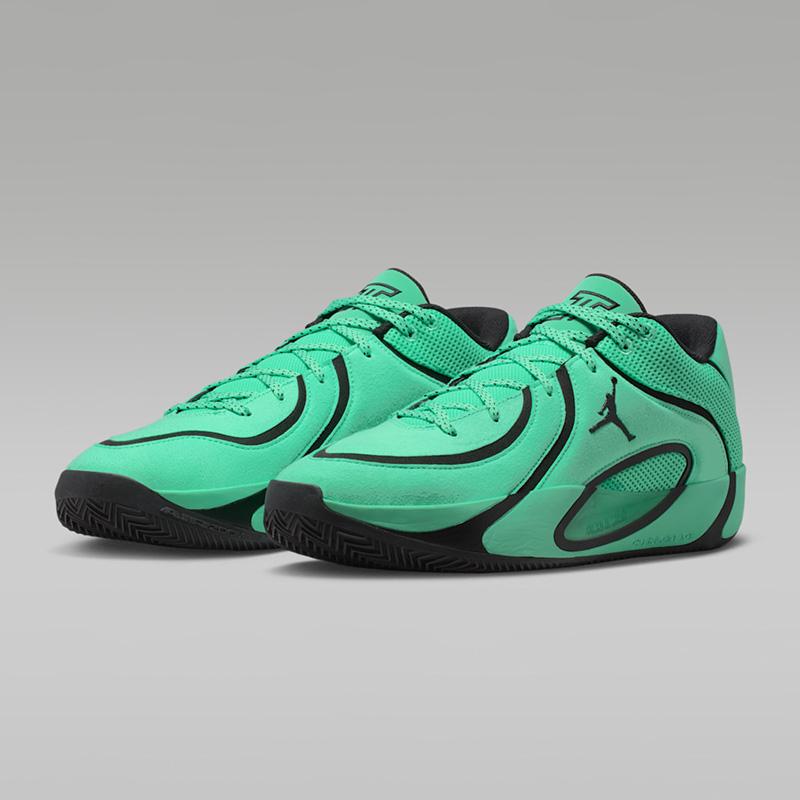
Start by separating the bottom surface from the side of the sole. The black area visible around the toe is not a plan view of the whole outsole. Lines can continue around an edge, while other sections remain hidden against the background. A buyer selecting from this angle has seen a useful detail, but not the complete layout.
Also separate the surrounding green side panels from the black tread. Their curved outlines help locate the shoe in the photograph; they are not additional tread directions. Writing "angular grooves visible at the black toe edge" is more precise than describing every sculpted line as part of a single traction pattern.
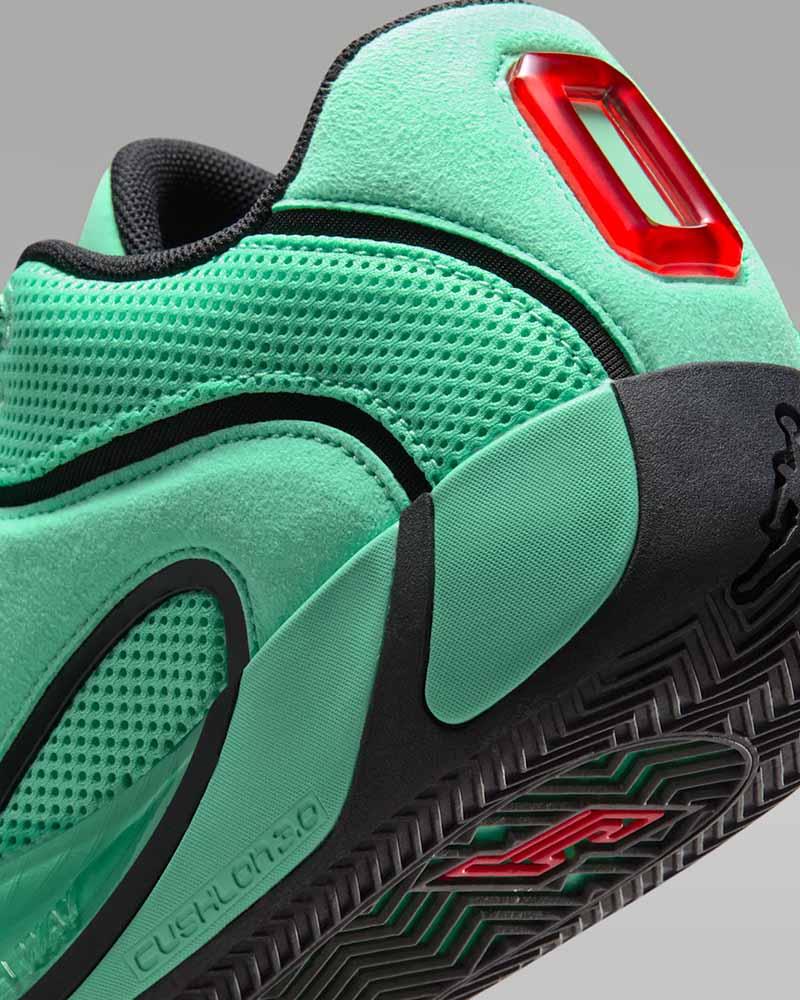
In this detail, narrow angled lines repeat beside larger outlined shapes. Some lines turn back toward neighboring lines; others change direction near the central motif. Describe that visible relationship before using a broad label such as herringbone. A familiar name is useful shorthand only after buyer and supplier agree which feature it refers to.
For an inquiry, distinguish parallel diagonal lines, repeated zigzags, curved lines and separate patterned regions. These are descriptive terms, not a universal classification system. Where two forms occur together, say so instead of forcing the whole sole into whichever name first attracts attention.
The central colored motif is a separate visual landmark. Its presence does not establish a different rubber compound or a technical insert. Describe the interruption in the surrounding line pattern without inventing what lies beneath it.
Decide whether the requested pattern must appear at the forefoot, heel, perimeter or across a broader area. A requirement for zigzag lines near the forefoot leaves room for another layout at the heel. A requirement for a largely continuous zigzag layout is narrower and needs a full underside view to assess.
A tilted close-up can illustrate these distinctions without answering all of them. Do not estimate an area percentage from it: the angle compresses some surfaces, and the crop omits others. When exact coverage matters, request an unobstructed underside photograph with the toe and heel both inside the frame.
| Starting phrase | More useful specification | What would change the answer |
|---|---|---|
| Zigzag sole | Repeated angled lines in the stated forefoot region | Zigzags appear only at an edge, while the requested region has a different layout |
| Same pattern throughout | A similar line arrangement over the visible heel and forefoot, with permitted interruptions listed | A substantial region switches to curved lines or another motif |
| Black patterned outsole | Black appearance and the agreed groove layout recorded as separate preferences | A color match conceals a different arrangement of lines |
| Like the reference photograph | The selected feature named beside its location in that reference | The alternative copies the upper but not the requested underside detail |
Use the table to compare design descriptions, not to grade remaining tread. Pattern layout and present condition need different answers. A recognizable zigzag can still have worn areas; an unfamiliar layout is not automatically damage. This article does not set a wear threshold, a remaining-life estimate or a court-use approval.
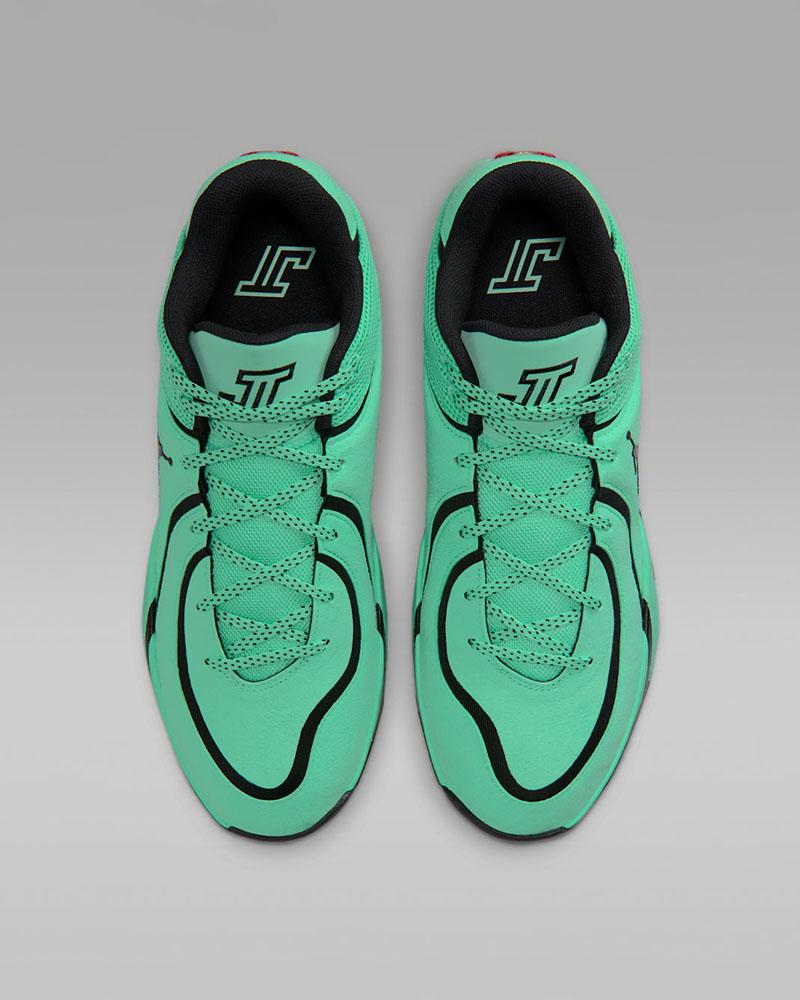
Keep the whole-shoe view to show which appearance the discussion concerns. Use the tilted detail to identify the lines being discussed. Use the top view as a reminder of what an upper-led catalog leaves unseen. Three different angles are useful only when their different limits remain clear.
For the actual proposed selection, ask for a paired underside view in the same orientation, followed by a closer view of any ambiguous region. Keep the full outline in the first image so that a detail can be located. Do not ask for tighter and tighter crops when the unresolved question is how much of the sole carries the pattern.
Neither color nor line direction supplies a grip ranking. Rubber behavior, the surface in use and the present pair's condition are not established by these photographs. A pattern preference can guide an appearance-based request without becoming a performance promise.
Before requesting used basketball shoes for sale, choose between a narrowly defined layout and a broader selection containing several layouts. For example, a hypothetical brief could accept angular forefoot patterns with different heel designs. Another could require the buyer to review each alternative to a named reference. Those choices produce different sourcing conversations even when both begin with the word zigzag.
In a wholesale used sneakers inquiry, describe the preferred location, coverage and accepted differences together. Availability, size distribution, condition boundaries and packing remain subject to quotation. The minimum order is one 20-foot general-purpose container (1x20GP); photographs of individual pairs do not offer retail or loose-pair purchasing.
No. Color and the arrangement of grooves are separate observations. Ask for the underside rather than matching an alternative by its black edge alone.
Only the area included in the image is visible. A full underside view is needed before describing how the pattern extends between heel and forefoot.
Not automatically. Record its position and the surrounding lines. Its color alone does not establish a separate compound, insert or functional zone.
Yes, as a quotation-confirmed preference. Name the differences you accept instead of asking for one pattern and silently broadening the description afterward.
No. It compares visible layout. Intended-use information and the actual used pair require their own assessment; the illustrated grooves do not establish either.
Specify where the desired lines should appear and how widely they should extend. Then compare complete underside views, using details to resolve local questions rather than to stand in for the missing whole. The result is a clearer pattern-selection brief, with color, condition and performance kept separate from tread layout.

Direct Factory Supplier of Used Shoes For African Markets In China
 Tel: +8618606960861
 Email: info@usedshoeswholesale.com
 MP/WhatsApp: +8618606960861
 Manufacturer Address:Cizao Town, Jinjiang City, Quanzhou City, Fujian Province