Author:Used Wholesale Manufacturer TIME:2026-11-18
A colorful clog display can offer many appearance choices while repeating a similar underlying design. Another display may contain fewer colors but more visibly different shapes. Before comparing used clogs described as assorted styles, decide which kind of variety matters to the intended range. Counting every color or decorative fitting as a new style can make two very different offers sound equally broad.
A buyer may want a coherent-looking range with several color options. Similar outlines are not a disadvantage when that is the actual preference. The useful question is which colors are represented in the proposed selection.
Another buyer may want noticeably different profiles, upper patterns or strap arrangements. Several colors of a similar-looking base do not automatically satisfy that preference. The useful question is which visible design differences remain after color is set aside.
Neither preference is universally better. Do not invent a market rule that more colors or more shapes will sell faster. Use the buyer's own range plan to choose the comparison. If no preference has been set, describe both dimensions instead of compressing them into the vague word varied.
The current mixed-size slipper product separates style allocation from size distribution. That distinction is a starting point, but the buyer and seller still need a common meaning for style. A size change, a color change and a different-looking construction should not all be added together as though they measure the same thing.
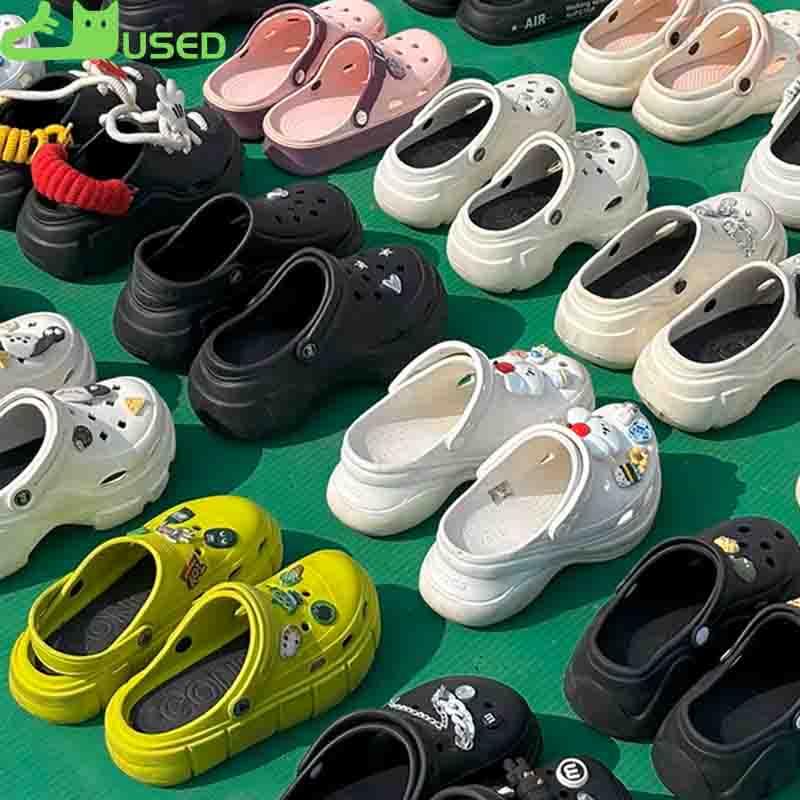
Start with visible features that remain when the color name is omitted: the upper outline, arrangement of openings, sidewall profile and rear configuration. In this photograph, pale and dark examples can share a broad visual resemblance, while other examples have noticeably different sole edges or ornament arrangements.
Keep this as a visual comparison. A sidewall that appears taller in an angled photograph has not been measured, and a similar outline does not prove the same mold, model or material. Use temporary descriptions such as similar-looking rounded profile when an exact identity is unavailable. A provisional group is useful precisely because it does not pretend to supply a missing manufacturer code.
If the seller has reliable item-linked style references, retain those references. Do not replace them with a visual guess. Where references are absent, keep the proposed groups open to revision after clearer photographs. The aim is to understand the range being discussed, not to manufacture a precise count of models from a crowded display.
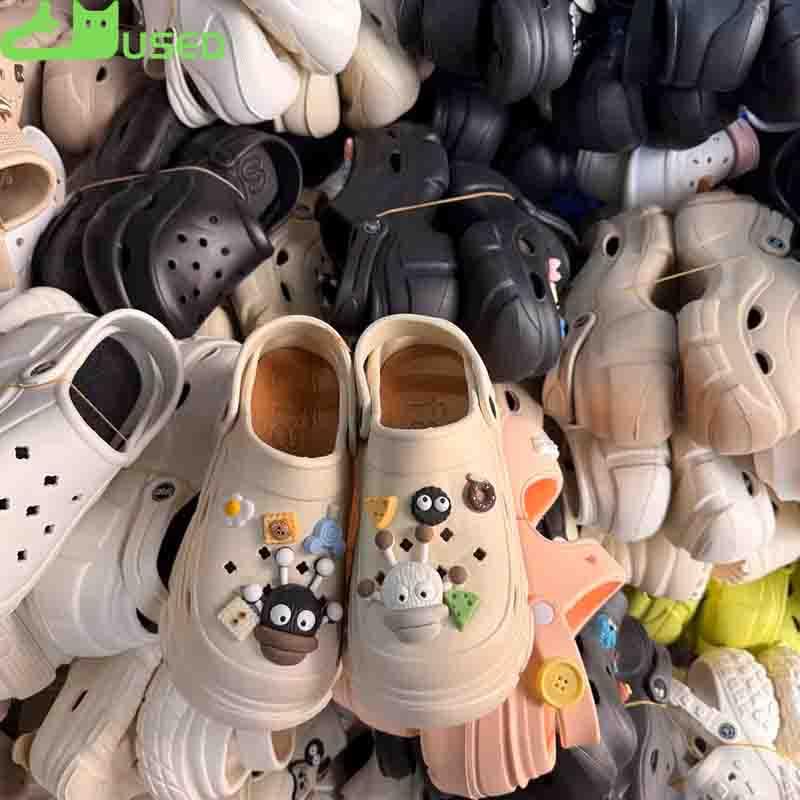
The prominent beige-looking examples carry different decorations. That is a visible appearance difference, not proof of two manufacturer styles.
Keep an ornament note beside the base description rather than letting each fitting create another style entry. Do not assume a decoration can be removed, replaced or supplied in a matching set.
Decoration may matter commercially even when it does not define a separate base design. A buyer seeking plain-looking footwear needs to discuss that preference directly. A buyer accepting varied decoration may choose to describe the visible differences. Neither choice requires a claim about original accessories or how the fittings are attached.
Before accepting a statement such as many styles, ask which visible or documented differences the seller is counting. The table below separates the kinds of difference without assigning numerical weights or inventing a minimum variety requirement.
| Difference between examples | Color choice | Design breadth | Keep unresolved |
|---|---|---|---|
| Different colors, similar-looking outlines | Record the visible color options. | Do not automatically add another base design. | Whether an exact style reference is shared. |
| Same broad color, visibly different upper or rear arrangement | No extra color is established. | Record the design difference for review. | Exact model identity and measured dimensions. |
| Different ornaments on similar-looking bases | Describe ornament colors separately if useful. | Keep accessory appearance apart from base design. | Originality, attachment and inclusion in the offer. |
| Different marked sizes of a documented style | A size difference is not a color option. | A size difference alone is not another style. | Actual quantity and distribution by size. |
| A slide shown beside the clogs | Do not add its color to a clog-only range. | Discuss it as a separate footwear form. | Whether the buyer wants that separate category. |
The same method should govern both offers being compared. Otherwise, one seller's style total might describe color options while another's refers to distinct documented designs. The totals would look comparable but answer different questions. A written description of the grouping is more useful than an unsupported large number.

For a clog-only comparison, leave surrounding open-toe footwear outside both the color and design summaries.
For the used slipper assortment, request a short summary with separate color and design descriptions. Where a style identity is documented, keep its reference. Where only a visual group is supported, say so. Keep decoration as a further note rather than folding it into an unexplained style total.
State which kind of variety the buyer values and let the supplier answer against current goods. No ratio can be inferred from these display images. The site's minimum of one 20GP container and no-retail position also remain unchanged: identifying an interesting color or shape does not reserve the pictured item or create an individual-pair order.
If the proposed assortment changes, revisit the affected description. Replacing one color with another may preserve a similar-looking base while changing color choice. Replacing the base with a different profile may preserve the color but change design breadth. These are different revisions and should be discussed in those terms.
No. They may represent color options within similar-looking designs. Establish what the seller means by style before comparing a stated total.
Not from resemblance alone. Use a reliable style reference when available; otherwise retain a provisional visual grouping and its uncertainty.
Not automatically. Keep decoration separate from the underlying design, and avoid assumptions about original accessories or their removability.
No general conclusion follows. A buyer may prefer color choice within a consistent look or a range of different looks. The intended assortment, not the photograph's visual busyness, should determine the preference.
Decide whether the proposed range needs more colors within a similar look or a broader choice of visible designs. Keep those answers separate when reviewing a revised selection: another color, another ornament and another base design are not interchangeable additions. Compare the current offer on the kind of variety requested, leaving unsupported model totals out of the decision.

Direct Factory Supplier of Used Shoes For African Markets In China
 Tel: +8618606960861
 Email: info@usedshoeswholesale.com
 MP/WhatsApp: +8618606960861
 Manufacturer Address:Cizao Town, Jinjiang City, Quanzhou City, Fujian Province