Author:Used Wholesale Manufacturer TIME:2026-08-13
Second hand cowboy boot odor evidence request
A buyer asking about odor in second hand cowboy boots needs evidence that is current, package-linked and collected under a defined observation protocol. A seller saying that stock smells clean, has been aired, or has received a treatment does not establish the shipment condition or a health outcome. The buyer should specify sample selection, timing after package opening, inspection zones, wetness and residue records, process details where treatment has occurred, and decision routes for unresolved stock. This evidence narrows purchasing uncertainty. It does not prove a diagnosis, sanitation, permanent removal or the condition of every pair outside the inspected sample.
Identify the offer, date, stock location and whether the evidence must show exact allocated packages. Define the number of packages and pairs, random or stratified selection method, category and size coverage, and who controls the selection references.
Use neutral observation language and a simple agreed scale. Ask the supplier to record wetness, residue, staining, packaging condition and visible damage beside odor. State that the request does not ask for medical, hygiene or safety conclusions.
lot and current date reference
packages pairs and selection owner
neutral scale and observation words
no diagnosis or health claim
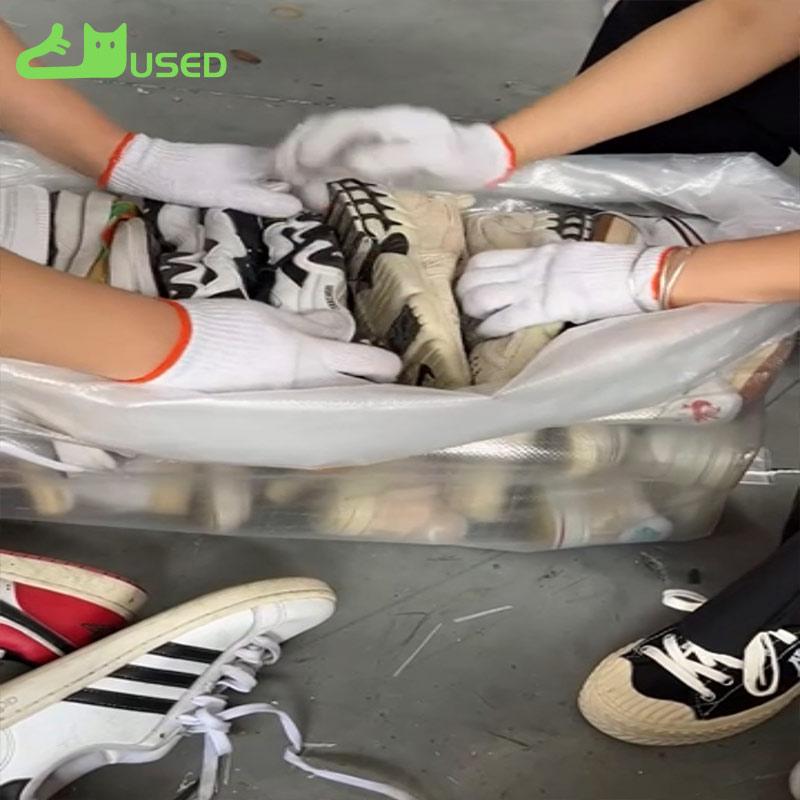
Begin with unopened or current package state where practical, package marks, closure, damage and wetness. Record opening time and move continuously to the selected pair. Note how long after opening the first and later observations occur.
A video recorded after unknown airing or fragrance use cannot be compared directly with arrival conditions. Ask for disclosure of prior ventilation, cleaning, treatment or repacking. Preserve cuts and pauses in the evidence log.
mark closure damage and moisture
opening and observation interval
package to selected pair
airing cleaning fragrance or repack
Each link shows what the evidence can answer and what remains uncertain.
| Evidence link | Required context | Decision use | Unresolved limit |
|---|---|---|---|
| Sample request | Offer package selection and terms | Define evidence scope | Uninspected stock |
| Package opening | Marks condition timing and prior action | Interpret observation context | Hidden history |
| Zone comparison | Same order mates wetness and residue | Route selected pairs | Exact source diagnosis |
| Process record | Task operator setting zone and drying | Verify documented work | Sanitation or permanent outcome |
| Receiving replay | Same terms and package links | Reconcile claim and next order | Future shipment condition |
Useful odor evidence is current and traceable while remaining honest about what observation cannot prove.
For each selected pair, show both boots and record the same zones in the same order. Include shaft and collar, lining, insole surface and underside where safely removable, toe area, seams, sole edge and any concentrated stain or residue. Compare mates.
The record should say where an observation is strongest, weakest or absent, not why. Keep material descriptions qualified by supplied evidence. Unidentified residue, severe wetness, pests, sharp objects or visible growth should trigger the agreed hold route.
same zones every pair
left-right comparison
stain wetness layer and residue
defined escalation trigger
If the seller reports cleaning, drying, airing, insert replacement or another process, request date, operator, product or equipment, setting or concentration where relevant, application zone, contact time, drying condition and material check. Connect the process to the same packages or pairs.
A process record supports only the fact that the documented step occurred. It does not by itself prove disinfection, complete odor removal, safety or future stability. Unsupported outcome language should not enter the purchase file.
operator or provider
product equipment and task
package pair and zone
date duration and drying
Flag the timestamp, package, pair, zone and observation that conflicts with the offer or other samples. Request a repeat under the same terms, a second selected pair from the package, moisture evidence, the underside of a removable insert or another precise view.
Do not replace an unfavorable selection with an unrelated attractive pair. Keep the original and follow-up together. If the supplier cannot reconnect evidence to the same stock, treat the uncertainty as open and narrow, reprice, hold or decline the relevant scope.
exact package pair and timestamp
same observation conditions
additional controlled selection
closed narrowed repriced held declined
Report unaffected observations, process candidates, material holds and declines from the defined sample. Add preparation minutes, drying capacity, specialist review and possible failed work to a downside plan. Preserve the denominator and sample limitation.
Do not convert the sample into a confident shipment-wide percentage when the method is weak. Payment or price approval should recognize unresolved packages and the cost of isolation at receiving. Keep ordinary released stock separate from restricted or held routes.
sample-supported route counts
higher isolation and failed work
handling process and capacity
accept narrow reprice hold decline
At receiving, record package condition and opening time before preparation. Repeat the same zone order and scale on selected packages, noting wetness, residue, damage and prior-process differences. Link variance to package marks and the agreed evidence window.
Compare supplier evidence with received observations and process burden. Change one package selection rule, opening interval, zone view, packing requirement, process evidence item or exclusion for the next order.
package state and timing
same zone and observation terms
supplier evidence versus received
one request or packing control
No. Request package-linked observations under defined timing and selection.
Ventilation can change the observation and comparability.
It may document a process, but arrival still requires inspection and claim limits.
No. Preserve sample limits and use a downside plan.
Package state, opening time, zone order, observation terms and co-occurring wetness or residue.
Second hand cowboy boot odor evidence should reduce uncertainty without pretending to diagnose or guarantee an outcome. The used men's shoes wholesale category provides the men's footwear context; controlled selection, opening timing, zone comparison, limited process records, downside pricing and receiving replay govern the decision. Use the page inquiry form to request package-linked views, observation terms, sample scope and packing details.

Direct Factory Supplier of Used Shoes For African Markets In China
 Tel: +8618606960861
 Email: info@usedshoeswholesale.com
 MP/WhatsApp: +8618606960861
 Manufacturer Address:Cizao Town, Jinjiang City, Quanzhou City, Fujian Province