Author:Used Wholesale Manufacturer TIME:2026-08-13
Used men's footwear channel allocation
A market-ready men's footwear mix starts at the outlet, not at the supplier's broad category count. Work shoes, formal pairs, casual shoes and sports styles occupy different display space, require different preparation and move through different price lanes. The buyer therefore needs a channel-capacity plan that records what each outlet can present, which marked sizes are aging or missing, and how much cleaning or service the team can complete. The wholesale specification is the output of that plan. It is not a copied percentage for a country, and it should leave unknown or poorly evidenced cohorts small enough to test.
List each store, market table, online catalogue or transfer customer separately. Record display capacity, stock on hand, stock age, completed outcomes, markdowns, questions, returns and preparation backlog where the buyer legitimately has those records. Do not merge unlike channels into one demand number.
Turn the record into a bounded purchasing question. A workwear outlet may need durable-looking pairs in defined size bands, while an office-wear shop may need a smaller formal range with tighter presentation requirements. These are buyer hypotheses to test, not general market facts.
display storage and listing slots
category size condition and age
completed sale transfer markdown or return
one measurable assortment gap
Write a physical taxonomy for work, formal, casual, sport, sandals or other approved groups, then define outside-scope and unknown. Use observable construction and form fields rather than assumed wearer behavior. A boot, lace-up, loafer or trainer can be counted without promising safety, comfort or performance.
Add condition routes and permitted service to each use group. Prevent overlap by stating which rule wins when a pair could fit two groups. The same labels must appear in supplier samples, package marks, receiving sheets and outlet allocation so the ratio cannot be changed after arrival.
observable form and inclusion rule
outside-scope and ambiguous route
ready work restrict hold decline
same label from sample to outlet
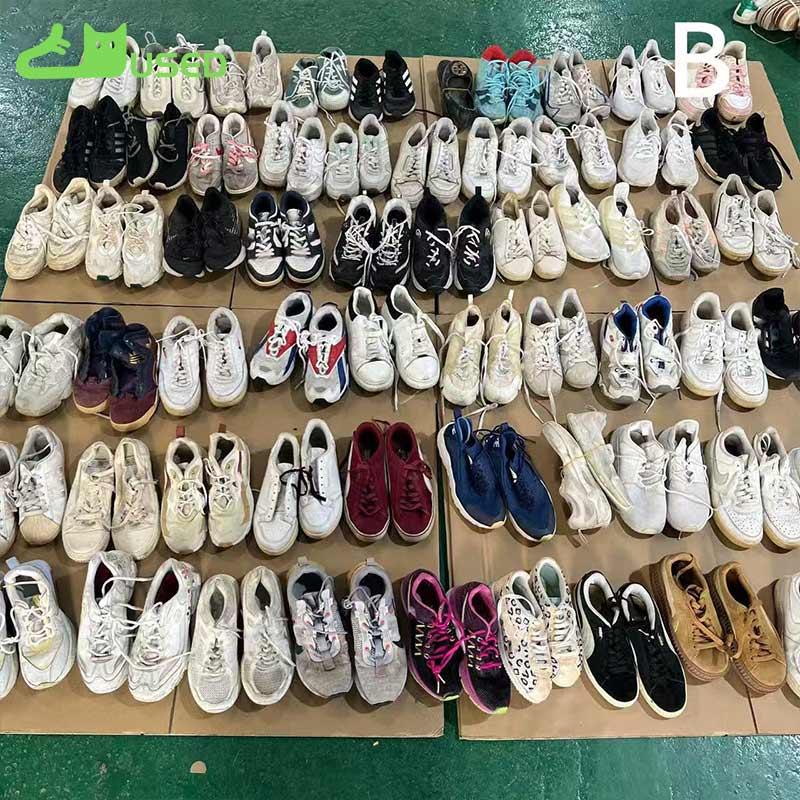
Count marked sizes with the stated size system and preserve unreadable or conflicting marks. Keep category, outlet and condition attached to the count. A nominally balanced men's load can still overconcentrate a slow size within one use group.
Use dated channel records to establish minimums, preferred ranges and caps. Where evidence is thin, authorize a small test instead of filling the assumed curve. Include mate mismatch and outside-curve stock in the downside, and never translate marked size into fit certainty.
mark as present
minimum range cap and evidence date
unreadable conflict and mate variance
marked size is not fit guarantee
Time representative tasks separately: pair matching, surface cleaning, lace or insole work where approved, drying, inspection, photography, listing and transfer. Record direct materials, queue time and the condition field that triggers each task. Do not treat a generic cleaning charge as equal across formal leather-look shoes, textiles and heavy work forms.
Cap the number of service-route pairs by weekly workbench capacity and outlet deadline. Keep unsupported material claims out of treatment decisions. If the allowed process, cost or evidence is uncertain, route the pair to hold or decline rather than forcing it through the ready lane.
defined operation and trigger
direct minutes and queue
supported treatment boundary
pairs per release window
This board converts outlet evidence into countable load instructions without inventing a universal category ratio.
| Channel bay | Required local record | Load instruction | Capacity stop |
|---|---|---|---|
| Workwear | Stock age size requests outcomes and returns | Defined work forms size bands and condition | Display or service backlog |
| Formal/office | Occasion timing presentation and price lane | Form color size and finish limits | Listing or preparation ceiling |
| Casual | Repeat questions size age and markdown | Observable casual groups with caps | Slow-size concentration |
| Sport | Model form size and condition outcomes | Trainer groups without performance claims | Inspection and service ceiling |
| Unknown/test | No reliable record | Small labelled trial only | Money pair and review-date cap |
Every percentage must trace to a named channel, a dated record and a package-verifiable rule.
Specify use-group ratios, marked-size ranges and caps, condition routes, pair containment, approved substitutions, bale identity, count basis, dimensions, gross weight and defined goods weight. Require random or stratified sample evidence using the same taxonomy.
Reconcile every package to the outlet allocation before loading. A theoretical bale or container capacity does not prove accepted-pair yield. Model freight and preparation cost using measured packages and a downside allowance for unknown, service, hold and decline stock.
use group and condition route
system band cap and unknown
mark count weight and containment
accepted range and response

At receiving, sample packages across load positions and record counts, use groups, marked sizes, pair status, wetness, damage and preparation route before work begins. Link variance to bale marks and update released yield and workshop demand.
Allocate released cohorts to their planned channel bays and track stock age, completed outcomes, markdowns, questions and returns where available. Change one group ratio, size cap, service ceiling, package rule or buying price for the next load. This keeps improvement attributable instead of replacing the whole plan after one result.
package and cohort variance
accepted pairs and workshop load
age outcome markdown question return
one attributable control
No. Build ratios from the buyer's named channels and dated records.
No. Preserve the stated system and treat fit as a separate customer decision.
Only when task, cost, deadline and workshop capacity are controlled.
Write one precedence rule and use it in sampling, packing and receiving.
Change one evidenced ratio, size cap, service ceiling, package rule or price.
Used men's shoes become a usable wholesale mix when outlet capacity, use-group definitions, marked-size evidence and preparation limits are connected before packing. The used men's shoes wholesale category provides the product context; named channel records, auditable bale rules and package-linked receiving results govern the actual allocation. Use the page inquiry form to request current category views, size counts, condition fields and packing options.

Direct Factory Supplier of Used Shoes For African Markets In China
 Tel: +8618606960861
 Email: info@usedshoeswholesale.com
 MP/WhatsApp: +8618606960861
 Manufacturer Address:Cizao Town, Jinjiang City, Quanzhou City, Fujian Province