Author:Used Wholesale Manufacturer TIME:2026-10-18
A closed toe can distract from an open heel. In a selection of used clogs, that difference matters before anyone discusses colour or quantity: a ventilated slip-on with a rear strap is not the same construction as a fully enclosed shoe. Write the requested toe coverage and rear opening into the order so a familiar silhouette does not settle the purchase by itself.
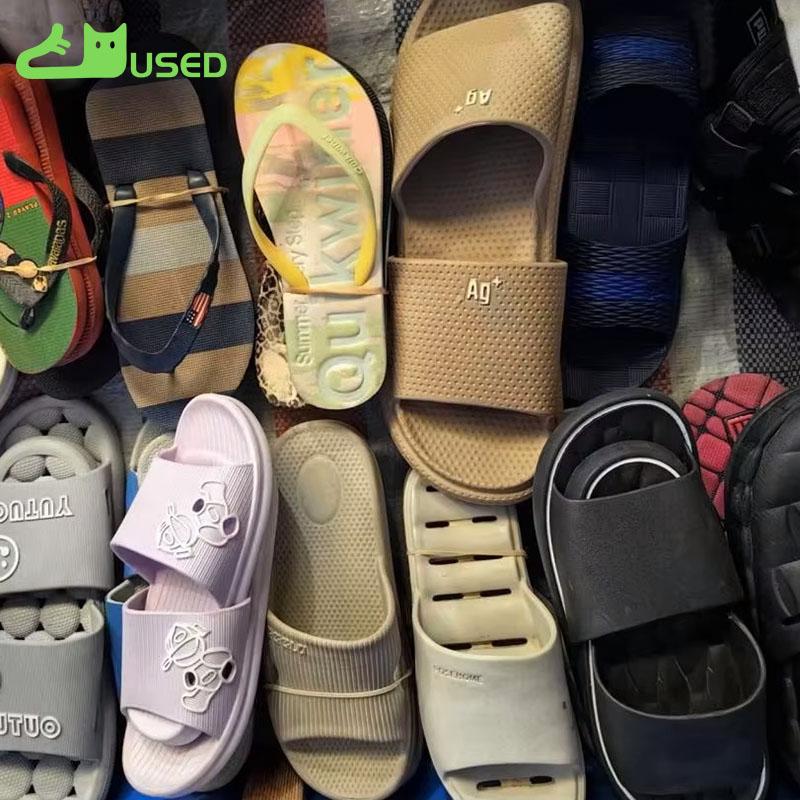
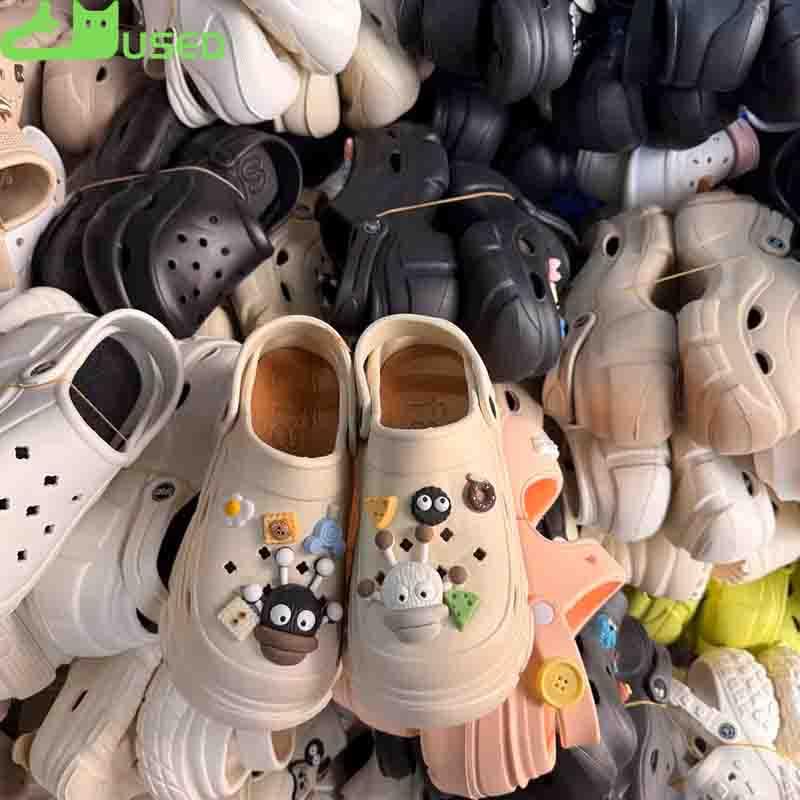
The available photographs show molded-looking clogs mixed with open-toe footwear. They support a conversation about construction, not a promise that every style shown can be supplied separately. Start by identifying the pictured form, then ask whether the actual offer matches it.
Look first at what encloses the foot. The display below includes rounded closed toes with holes through the upper, open heels and rear straps. Some soles have a noticeably taller sidewall than others. These are useful visible differences to put into a buying request. None identifies the chemical composition of the upper or explains how the shoe behaves under load.
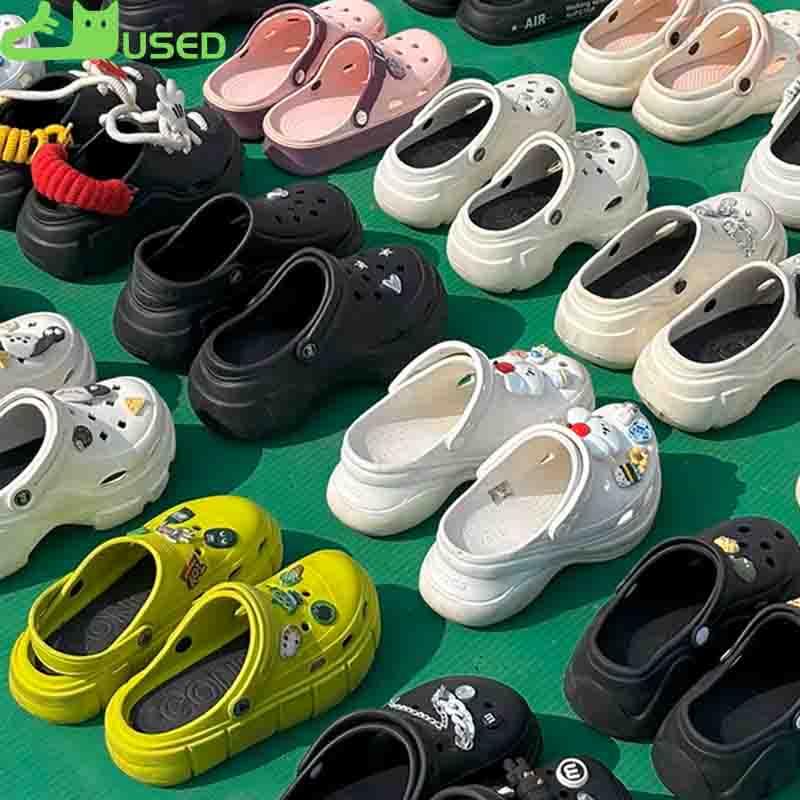
Do not merge these shoes with every other closed-toe slip-on. An unventilated upper, separate stitched upper or closed rear changes the description. If you require one of those features, ask for a photograph showing it on the offered style. Avoid adding it to the order because the supplier also uses the word clog.
This describes the outline without implying enclosed footwear. A raised heel edge or a strap behind the foot does not make the back a closed upper.
This is a visibly different slide construction. It may belong in the same slipper offer, but it should not silently replace the closed-toe form requested.
A rear strap is another purchasing detail, not a certificate. Ask whether the offer includes straps in the intended configuration and whether photographs show both sides. If you need a fully open-back style, say so. If you need a closed heel, a rear strap alone does not answer that requirement. The distinction should be settled before the seller prepares a selection.
Use a short comparison to resolve product meaning. This is not a condition grade: a shoe can match the requested construction and still need a separate condition assessment. Equally, an attractive pair can be the wrong construction for the intended listing.
| Requested feature | An alternative to discuss | A change requiring a new answer |
|---|---|---|
| Ventilated closed toe and open heel | A different colour with the same visible enclosure | An open-toe slide replacing the closed toe |
| Rear strap included | A different strap position, shown on the offered pair | A strapless style or an undisclosed missing attachment |
| Unventilated upper and closed heel | Another style that visibly has both features | A ventilated open-back clog described as equivalent |
| Clogs kept separate from slides | Separately identified packages in one shipment | A mixed package with no construction breakdown |

For a reseller, the expensive misunderstanding may begin in the listing rather than the carton. Calling an open-back clog a nursing shoe, kitchen shoe or protective shoe adds an intended use that these photographs do not establish. A broad sole or enclosed toe is not evidence of resistance to slipping, heat, chemicals or impact.
Describe the visible construction in ordinary terms and keep unverified performance language out. The same restraint applies to brand names. An enquiry for used crocs is not confirmation that every similar-looking clog belongs to that brand. Separate a brand-specific request from a construction-only request, and seek appropriate identity evidence before adopting branded wording.
A useful request names the desired toe coverage, ventilation and rear opening, then lists acceptable alternatives. For example, a buyer may want ventilated closed-toe clogs with open heels, while excluding broad-band slides. That describes a product boundary without pretending to specify a factory model or a material that has not been verified.
Ask the seller to answer against the current selection: which requested features are shown, which alternatives are proposed, and which details remain unconfirmed. A photograph of several styles can introduce the range, but the reply should identify the actual construction being offered. Keep appearance, identity and condition as separate questions.
When selecting from the used slipper product range, attach the exclusions to the enquiry: for example, no open-toe slide substitutions in the clog selection. A used shoes wholesale quote should answer that construction boundary explicitly, rather than leaving the buyer to infer it from the total quantity.

After agreeing on a construction, carry that wording into the packing description. A package identified only as slippers can obscure a previously agreed distinction between clogs and slides. Ask how the supplier will identify any separated selection and any permitted substitutes. A packing photograph should accompany that description, not replace it.
When second hand shoes arrive, compare the contents with the agreed construction before using the planned product names. An unexpected open-toe style is a description mismatch even when its visible condition seems acceptable. Record the difference separately from damage or missing footwear so the supplier can address the actual disagreement.
No. Describe the strap and the open rear separately. A strap does not supply a closed heel upper or establish suitability for an enclosed-footwear requirement.
No. They describe the upper's visible form. Request material information from the seller if composition matters; do not infer it from holes, colour or apparent softness.
No. It can introduce the range. Ask the seller to distinguish the construction offered for your order from other styles shown alongside it.
Use the verified physical description, such as ventilated closed-toe clog with an open heel. Leave out occupational or protective claims that have not been substantiated.
Before requesting used clogs, write one sentence defining the construction and another naming unacceptable substitutes. Have the supplier answer those points against the current offer. This creates a clearer slipper purchase without turning a rounded toe, rear strap or familiar silhouette into a workwear promise.

Direct Factory Supplier of Used Shoes For African Markets In China
 Tel: +8618606960861
 Email: info@usedshoeswholesale.com
 MP/WhatsApp: +8618606960861
 Manufacturer Address:Cizao Town, Jinjiang City, Quanzhou City, Fujian Province