Author:Used Wholesale Manufacturer TIME:2026-09-25
Hiking boot moisture and outsole release
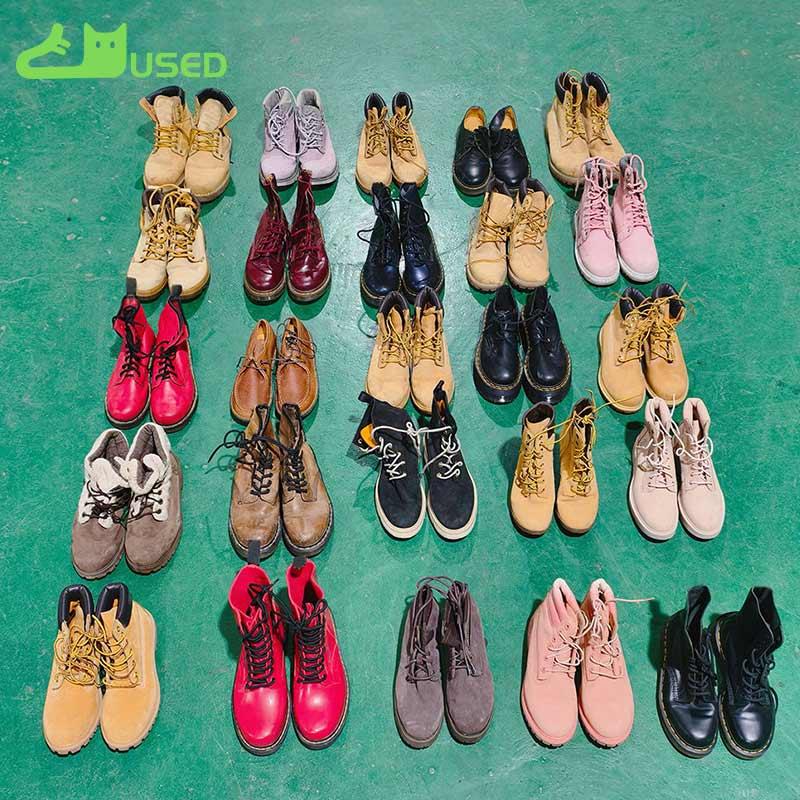
Used hiking boots for sale should be bought as an outdoor-condition decision, not as a broad boot lot. A reseller needs to know whether each pair has stable outsole edges, closed upper joins, readable sizing, and no unresolved moisture or odor route before it enters released stock. The rule changes when the buyer lacks random pair evidence, when shaft compression may damage the lot, or when any claim about waterproofing, support, or trail performance is not supported by current physical checks.
Name the allowed forms first: low hikers, mid boots, ankle boots, or mixed outdoor boots. Keep fashion boots and heavy work boots outside the count unless the buyer has approved a mixed lane. The sourcing note should also state the maximum accepted mud staining, insole condition, upper scuffing, and sole-edge wear.
The phrase used hiking boots for sale is useful only when the seller can show the actual condition boundary. Search demand does not define the order quantity. The buyer should size the first lot from current local stock age, cleaning capacity, and the number of pairs that can be described honestly after receiving.
low, mid, or ankle outdoor
fashion or work boot overflow
written wear ceiling
random pair views
Compare left and right outsoles for tread depth, heel drag, toe wear, delamination, cracks, uneven flex, and embedded debris. A pair with attractive uppers can still be a slow resale item if the outsole tells a different story. Record the defect in the lot file instead of smoothing it into a general grade.
Use a release code for ready pairs, a dry-review code for uncertain moisture, a repair-review code for open sole edges, and a reject code for unstable or incomplete pairs. That coding lets the importer calculate released yield without counting pairs that still need a decision.
depth and balance
crack and separation
left-right agreement
ready, review, or reject
Outdoor boots often carry water marks, interior odor, packed dirt, or lining wear. Record those findings before cleaning because a washed pair can hide the origin of the problem. Drying time, insole review, and any odor-control handling belong in the cost file rather than in a vague condition note.
Do not convert boot appearance into waterproof, hiking-safety, or support claims. Those statements require evidence that a used lot normally does not carry. The practical description can say what was inspected, what was held, and which resale wording remains allowed.
lining and insole
mark, odor, or drying route
unsupported wording blocked
handling minutes recorded
The table keeps outdoor boot appearance, physical release, and wording limits separate.
| Field | Release evidence | Hold trigger | Buyer decision |
|---|---|---|---|
| Outsole | Tread, heel, edge, flex, and delamination check | Uneven wear or open sole bond | Ready, repair review, or reject |
| Interior | Lining, insole, odor, and moisture record | Wet mark or unresolved odor route | Dry review or handling cost |
| Size cell | Marked size on complete mates | Single, conflict, or open route | Released count only |
| Packing | Code, count, weight, and selected layer view | Record-to-goods mismatch | Reopen before shipment |
A boot pair is released only when outsole, moisture, size, and packing evidence all close.
Cross marked size with boot height, outsole status, upper condition, and work route. Count only released pairs. A broad boot average can hide slow sizes, heavy cleaning work, and pairs that should have stayed in hold.
For importers comparing a hiking boot test with broader men's footwear categories, use the category context only as a reference while the boot release sheet controls this lot. Keep the test quantity smaller when evidence is incomplete or when local resale records are thin.
marked pair cells
low, mid, or ankle
clean, dry, or repair
buyer-set cap
Keep each mate together and avoid crushing collars or pulling weak eyelet areas against heavier goods. Dirty outsoles should not press into light uppers. A package label should carry source code, released pair count, size-cell summary, hold exclusions, gross weight, packer, and time.
Before closing the carton or sack, reopen one coded layer and reconcile the list with the actual pairs. The buyer should receive a view of the loaded allocation, not only a staged sample. That gives receiving staff a clear record when pairs arrive with new marks or shifted packaging.
mates and shaft shape
dirty soles from light uppers
count, size, weight, time
coded layer check
At receiving, repeat the outsole, moisture, size, mate, and work-route checks before merging the lot into general inventory. Record missing mates, new compression, odor variance, and changed work routes against the original code. Recalculate the released yield before distribution.
The next order should change one measurable rule: outsole ceiling, dry-review trigger, size-cell cap, package method, or sample depth. Scaling the same instruction without a closed arrival record turns an outdoor category into a guessing exercise.
same inspection fields
new or changed findings
released count after arrival
one rule revision
No. Record visible condition and block waterproof wording unless separate current evidence supports that claim.
No. Keep them in a dry-review or handling route until the buyer's rule closes.
Random outsole close-ups, interior views, mate checks, package codes, and selected layer records carry more value.
Divide product, freight, receiving, drying, cleaning, repair review, and storage work by released pairs only.
Only after receiving variance, work time, stock age, returns, and completed outcomes are closed by size cell.
Used hiking boots for sale become a workable wholesale test when outsole evidence, moisture holds, size cells, packing records, and arrival checks stay connected. The used men's shoes wholesale options help compare broader category supply, while the outdoor release rule decides which pairs can move into resale.

Direct Factory Supplier of Used Shoes For African Markets In China
 Tel: +8618606960861
 Email: info@usedshoeswholesale.com
 MP/WhatsApp: +8618606960861
 Manufacturer Address:Cizao Town, Jinjiang City, Quanzhou City, Fujian Province