Author:Used Wholesale Manufacturer TIME:2026-10-19
Two used flat sandals can carry the same size mark and still place a front band over different parts of the foot. A longer outer sole may include a projecting rim, while a shorter-looking sandal may offer a differently shaped standing surface. For a buyer preparing resale descriptions, the useful question is not which label looks familiar. It is what can be measured and shown without promising how the sandal will fit a person.
Ask for a readable photograph of each size mark and another showing the complete pair. Preserve letters, fractions and width markings as written. When a marking is faded or its sizing system is unclear, record that uncertainty. Do not convert an ambiguous number into a different country's size merely to fill a catalogue field.
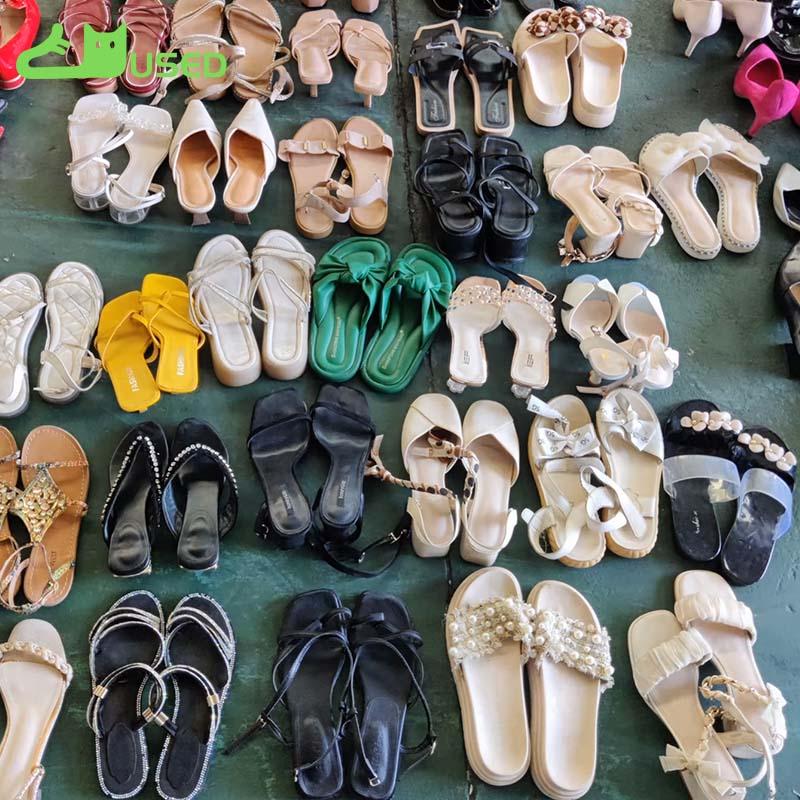
Mixed women's footwear photographs are useful for seeing the range, but they rarely expose every label. The display below contains flat-footbed sandals as well as heels. It does not establish a shared size system or make every pictured style a flat. Choose the specific offered sandal before requesting measurements.
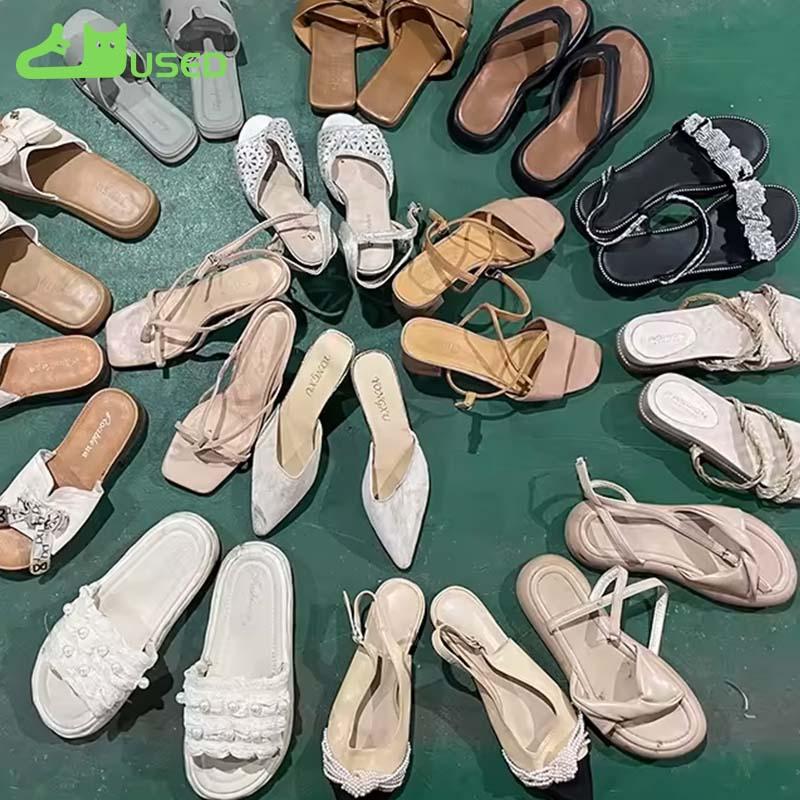
For a flat, fully visible footbed, agree on a straight heel-to-toe span between two marked endpoints. This is a straight-line reading, not the length of a tape following a curved surface. Leave the sandal resting naturally, place the ruler alongside those endpoints at the same height and photograph from above. Keep the fastening setting unchanged. The existing angled display images contain no such readings.
Distinguish outer-sole length from the visible footbed outline. A border around the toes or heel may project beyond the area where the foot sits. A raised edge can also narrow that area. Record where the seller starts and ends the measurement, rather than assuming that every reported length follows the same convention.
For width, mark the cross-section and both edges used for the reading. The widest outer edge is not automatically the width beneath the front band. If the band conceals an endpoint, or a contoured footbed prevents the agreed straight-span method, record that field as unavailable by this method. Request a separately agreed measurement instead of stretching the band, flattening the shoe or supplying an estimated usable width.
A sandal's band can cross near the toes or farther back. Several thin straps divide the upper differently from one broad band. Note their positions against the same heel reference used for the footbed record. If a strap runs diagonally, show where each end meets the side rather than reducing its position to one unexplained number.
Height and adjustment also matter to the description. A fixed band may have no buckle, while an adjustable strap may offer several holes or another fastening method. Photograph the actual setting used for any measurement. Do not pull a strap tight, stretch an opening or select a flattering angle to imply extra room.

Make measurements comparable by describing the method, not by inventing a universal allowance. Keep the original units. If a later conversion is needed, retain the original reading as well. The following record is intended for the offered pair; the photographs here do not provide its missing values.
| Record | Reference to show | Limit to state |
|---|---|---|
| Visible footbed length | Named endpoints, straight-span geometry and ruler placement | A measured outline, not a conversion to foot length |
| Width beneath the front band | A marked cross-section with both reference edges visible | Unavailable if the band hides the agreed endpoints |
| Band position | Both attachment points relative to the same heel reference | A position measurement does not establish pressure during wear |
| Adjustment setting | The actual hole, buckle or fastening position photographed | Do not imply that untested settings provide a verified fit range |
Repeat the observations on the left and right sandal. Keep the method and fastening setting consistent. If the outlines look different, first check whether the camera angle, shoe position or measurement endpoints changed. Record a remaining difference rather than averaging it into a single reassuring figure.
Visible footbed impressions, a curled edge or a band that sits differently can affect how an item should be described. Their appearance does not tell you the wearer's foot shape or the cause of the change. Ask for a closer view where needed and keep observed shape separate from claims about comfort, support or remaining life.

Present the marked size, documented dimensions and visible upper arrangement together. State when the sizing system is uncertain or a dimension follows an outer edge. This lets a customer compare information with footwear they already understand without being told that a number guarantees fit.
Request one completed measurement record for an offered flat sandal from the women's shoe range before extending the request to other sizes. In a used shoes wholesale order, this checks whether the seller can supply the same geometry consistently. Keep that record with the second hand shoes it describes; a general display should not stand in for individual size information.
No universal conversion follows from that measurement. Preserve the marked size, the measurement method and any uncertainty about the original sizing system.
Equal footbed lengths do not place the upper over the same part of the foot. Band position adds a visible design detail without claiming pressure or comfort.
Record the setting actually used and show it clearly. Other settings can be documented separately, but extension alone does not prove a wearable adjustment range.
Repeat them with consistent endpoints and positioning. If a difference remains, disclose it with the separate readings rather than hiding it in an average.
Request one pair-level measurement record before turning a size mark into a fit description. Keep the footbed outline, band positions and adjustment setting visible beside that mark. The result is a more informative description of used flat sandals, with clear limits and no universal conversion or comfort promise.

Direct Factory Supplier of Used Shoes For African Markets In China
 Tel: +8618606960861
 Email: info@usedshoeswholesale.com
 MP/WhatsApp: +8618606960861
 Manufacturer Address:Cizao Town, Jinjiang City, Quanzhou City, Fujian Province