Author:Used Wholesale Manufacturer TIME:2026-10-20
A stack tied with a band looks like a pair until the lower shoe is turned over. It may conceal the wrong side, a different size mark or another design. When used flip flops are offered inside a mixed slipper lot, the buying problem is straightforward: how many complete left-and-right pairs does the offer actually contain?
Neither the number of visible footbeds nor the weight of a wrapped package answers that question. Ask for a count that distinguishes individual shoes, possible mates and confirmed pairs. This is a quantity exercise before it is a condition decision.
Clarify whether a quoted number means shoes, pairs, tied bundles or packages. Ask the seller to state the unit beside the number wherever it appears. A photograph containing twenty visible shoes would not, by itself, establish ten pairs. This is an illustration of the counting distinction, not a description of the quantity in the supplied photographs.
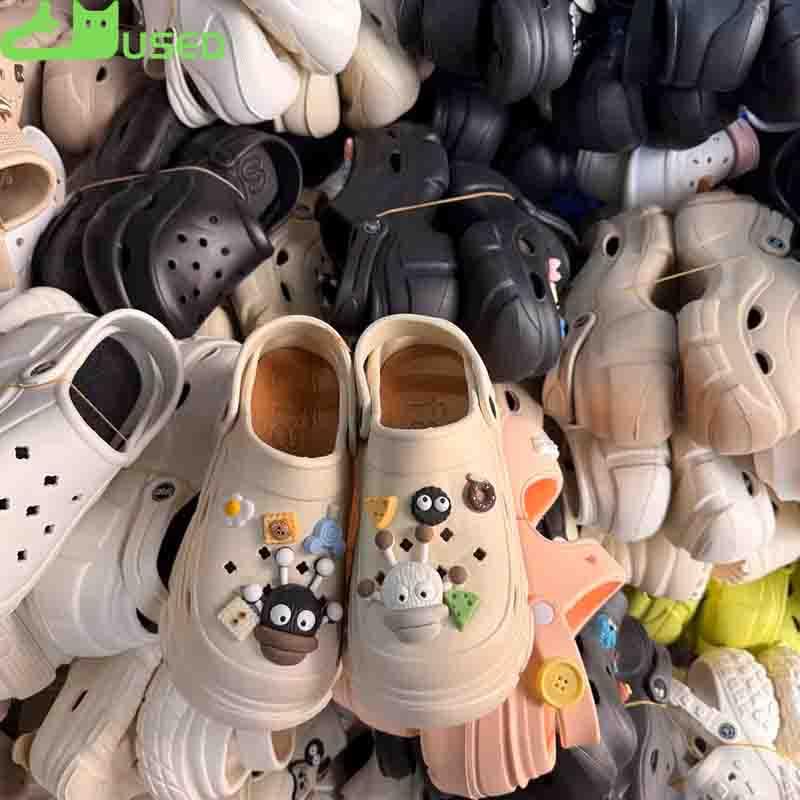
Define which items belong in the flip-flop total. The relevant feature here is the toe-post construction; broad-band slides appear alongside it in the available product images. Keep those other items outside the requested total unless the order explicitly includes them. Once the scope is clear, concentrate on matching mates rather than repeatedly renaming footwear types.

Request a view with the relevant stacks opened and the individual shoes separated. Use numbered rows or clearly marked sections so an item can be traced when the seller supplies a closer photograph. Leave enough space to see the toe shape, heel outline and strap arrangement without one shoe covering another.
For a larger selection, divide the work into identified groups rather than asking for one distant panorama. Each group needs its own total and a link to the package or selection it represents. A close-up can explain an uncertain match, but it should retain the item reference. Otherwise, a helpful detail image can accidentally be counted as additional stock.
Bring potential mates together and inspect both sides. Compare the marked size, footbed outline, toe-post location, strap design and colour arrangement. A similar print is a reason to compare two shoes, not sufficient proof that they belong together. Look for a compatible left-and-right orientation rather than assuming that two banded shoes form a pair.
When a label is unreadable or one item remains hidden, leave the match unresolved. Do not count an uncertain candidate twice by placing it beside different possible mates in successive photographs. Keep a separate place for singles and ambiguous matches until their status is clarified. The count should show what is known without quietly converting uncertainty into saleable pairs.

Use one ledger for each identified group. Count complete matches as pairs and unresolved footwear as individual shoes. Keep the two units explicit. The arithmetic can expose a missing item or double count, but it cannot correct an incorrectly matched pair.
Use this check only after every physical item has been assigned once. It says nothing about condition or saleability.
| Ledger entry | Unit | How it connects to the count | Required follow-up |
|---|---|---|---|
| Items laid out within scope | Individual shoes | The physical starting total | Check that no covered or repeated item was included |
| Confirmed left-and-right matches | Pairs | Each accounts for two physical shoes | Retain references for both mates |
| Singles or uncertain matches | Individual shoes | The remainder awaiting resolution | Clarify a mate, correct the scope or leave unresolved |
| Unexplained difference | Individual shoes | Starting total minus accounted-for shoes | Recount the affected group before accepting its pair total |
A matched pair can still have a condition problem. Record a later exclusion separately instead of rewriting the original physical count without explanation. This preserves the difference between missing footwear, uncertain matching and a complete pair that the buyer does not accept.
For a hypothetical check, twenty individual shoes might resolve into six confirmed pairs and eight unresolved shoes: twelve plus eight accounts for all twenty. If one confirmed pair is later excluded for condition, the accepted quantity becomes five pairs, but the physical count remains twenty. A second photograph of the same unresolved toe-post shoe adds no stock. This example illustrates the records only; it reports no actual lot or shipment.
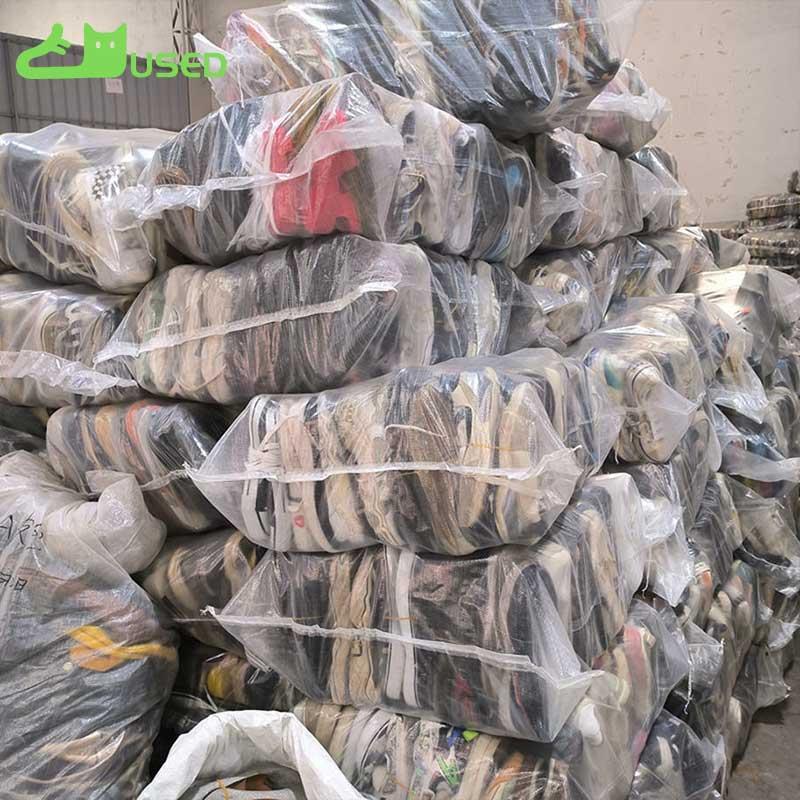
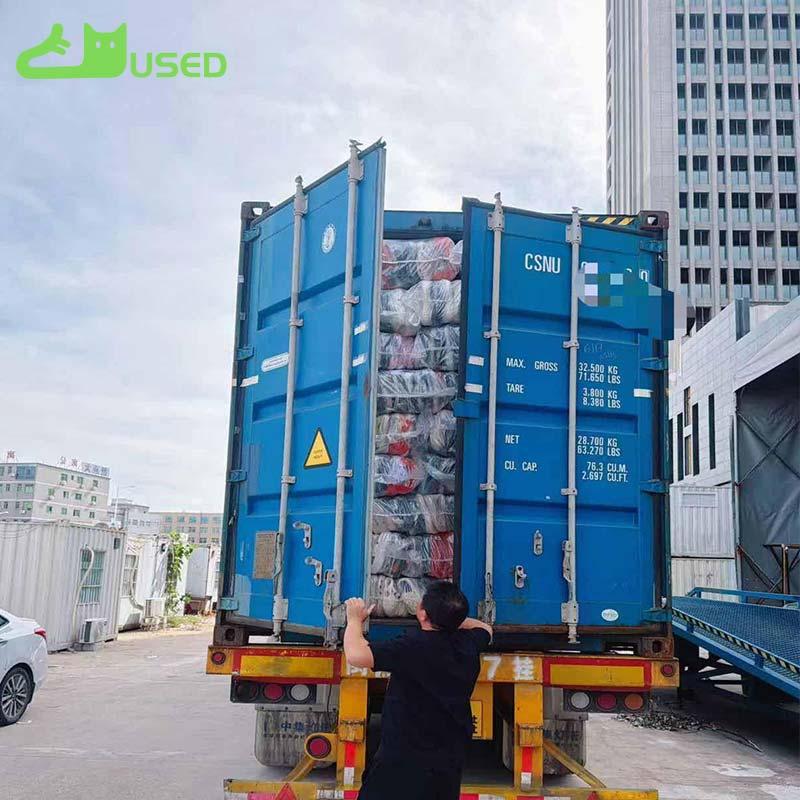
After matching, ask how the identified groups relate to the proposed packages. The packing record should retain the confirmed pair total and identify unresolved items separately. A final package image can show the package reference, but its wrapped exterior cannot replace the earlier layout.

A quote from the mixed used slipper range should put its unit beside each quantity: confirmed toe-post pairs, unresolved individual shoes, or package weight. Keep those columns separate in a used shoes wholesale enquiry. Converting weight to pairs without counting the underlying footwear would hide the very mismatch this ledger is intended to expose.
At receiving, use the package references to repeat the count for the corresponding groups. Photograph an unresolved item beside its reference and describe the discrepancy: missing shoe, unmatched side, different marked size or unexplained extra. Avoid reporting all differences simply as a shortage.
For second hand shoes, a claim is easier to discuss when the original unit is preserved. Compare pairs with pairs and individual shoes with individual shoes. If the physical total agrees but the matched total does not, investigate the matching decision. If both differ, return to the package and group records before assuming the cause.
No. Open the bundle and compare side, size mark and design. The band shows grouping, not a verified match.
It can support that tally when every item is visible once and traceable. Confirmed pairs still require linked left/right, size and design checks; an unobstructed overview does not resolve markings hidden underneath.
Keep it in the unresolved individual-shoe count until the proposed match is adequately clarified. Do not silently include it in a confirmed size-matched pair total.
No. Preserve the physical and matched counts, then record the condition exclusion separately. Otherwise, a quality disagreement can be mistaken for missing footwear.
Ask for an opened, referenced layout and a reconciled left-and-right count before accepting a flip-flop quantity. Carry that count into the package record and compare it again at receiving. A visible stack becomes a usable buying number only when the unit, mates and unresolved items are clear.

Direct Factory Supplier of Used Shoes For African Markets In China
 Tel: +8618606960861
 Email: info@usedshoeswholesale.com
 MP/WhatsApp: +8618606960861
 Manufacturer Address:Cizao Town, Jinjiang City, Quanzhou City, Fujian Province