Author:Used Wholesale Manufacturer TIME:2026-11-06
A shoe can look compact from above the laces yet extend farther back at the sole. That matters when a reseller places used Nike shoes on a shallow shelf: the heel of the upper is not necessarily the back of the shoe. Before assigning a display position, decide which side customers need to see and how the shoe will be lifted out. Then check the space occupied by the whole outline in that position.
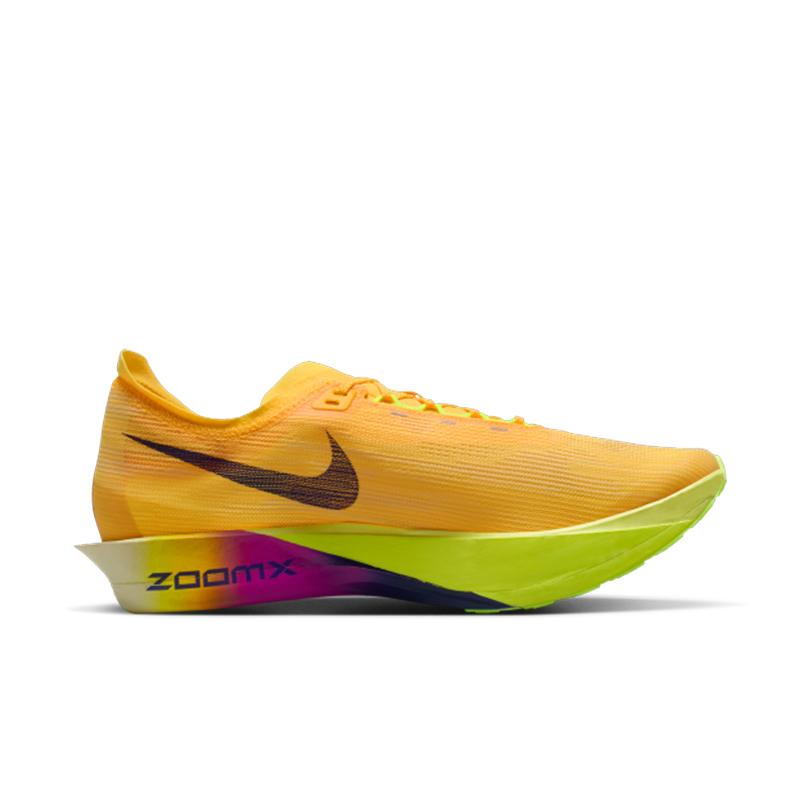
In this side view, the rear edge of the sole is behind the yellow upper. At the front, the sole curves upward around the toe. A display plan that measures only the upper misses part of that exterior shape. Conversely, the length touching a flat surface does not describe everything projecting above it.
Use the picture to identify the endpoints that need measuring on the proposed shoe. Do not calculate centimetres from the image or assume that all Nike constructions share this outline. Printed marks and a familiar silhouette also do not establish material, authenticity or remaining running performance. Those questions require their own evidence and are not answered by choosing a shelf position.
Describe the fixture before describing how many shoes it might display. A shelf has a usable front-to-back distance and a usable left-to-right span. A raised lip, upright, rear panel or price holder can reduce either. Record the clear space between those obstructions, rather than the outside dimensions of the furniture.
For the footwear, record the maximum outside length and width in its normal resting position, with units. Include the rear sole projection and any other part extending beyond the upper. Keep these dimensions separate from the size printed inside the shoe: one describes display space, while the other is a footwear size marking.
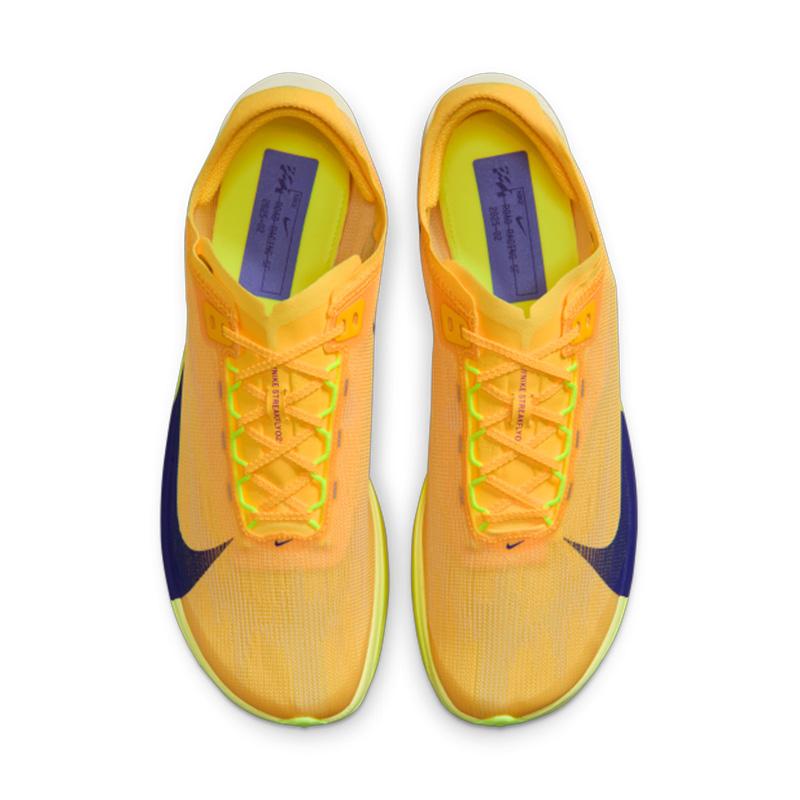
The most compact arrangement is not automatically the most useful display. A toe-forward position makes the front and laces easy to compare, but the long rear projection may be difficult to see. A side-on position shows that profile more clearly while taking more shelf frontage. An angled position offers a compromise only when its actual outline fits.
| Presentation | Space to examine | Visible feature | Reason to reconsider |
|---|---|---|---|
| Toe toward the customer | Full front-to-back outline, including the rear sole | Toe shape, lace arrangement and front of the upper | The rear projection meets the back panel, or the side profile matters to the description |
| Side toward the customer | Left-to-right length plus clear depth for the shoe's width | Sole projection, curved forefoot and side markings | The shoe consumes the frontage needed for neighboring displays |
| Angled presentation | Both depth and frontage in the chosen position | Part of the front and side together | The rear corner crosses the shelf boundary or a neighboring position |
Keep the shoe resting naturally while comparing these positions. Do not push the upper against the rear panel to make the sole appear to fit. If a separate stand changes the angle, check the complete shoe-and-stand arrangement. Its footprint and support are different from those of the shoe alone, and a catalogue image cannot approve the stand.
A display can fit when untouched and still be awkward to use. Place the intended price label and neighboring display beside the shoe, then lift it out and return it in the ordinary way. Notice whether a hand needs to move the adjacent item, whether the projecting heel catches behind a label holder, or whether the upper shelf prevents a normal lift.
There is no universal clearance to copy from the photograph. Keep enough space for the actual handling method and repeat the check when the fixture or display arrangement changes. If the shoe rocks, slips or rests partly beyond its intended support, change the arrangement rather than treating its appearance in a studio picture as proof of stability.
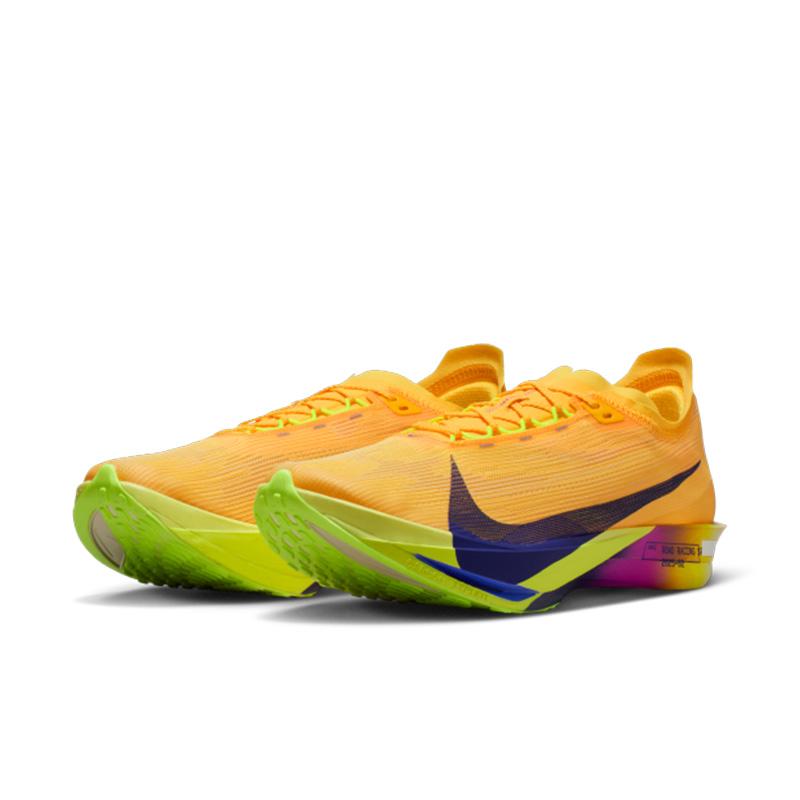
Showing both shoes can communicate a pair more directly, while a single display shoe leaves more room around its profile. Neither choice changes the need to keep the mates identifiable. If one shoe is stored elsewhere, give staff a reliable way to retrieve its mate; do not let a space-saving display create a pairing problem.
When reviewing the used Nike shoes selection, describe the intended fixture and the constructions you want to accommodate. Ask for outside dimensions of actual proposed pairs, not a measurement guessed from the catalogue example. Include different marked sizes and visibly different sole outlines where they occur; one shoe cannot establish the space needed by every pair in a mixed selection.
The website's minimum order is one 20GP container, with no retail or loose-pair sales. A shelf-space discussion therefore supports your own merchandising plan within a wholesale inquiry; it is not a request to buy the pictured pair individually. Choosing a product for that inquiry does not reserve stock or confirm that the pictured construction is available.
Keep a short record of the fixture dimensions, chosen orientation, measured shoe outline and handling result. Record an actual count only after arranging the proposed display. Do not convert an attractive studio photograph into a promise that a particular number of shoes will fit your shelves.
No. A size mark is not the maximum outside length. The rear sole extension, toe shape and overall construction must be measured on the shoe being considered.
No. The visible exterior curve does not establish the internal underfoot height difference. This display exercise concerns the outside outline, not fit or running specifications.
That is a merchandising choice. A one-shoe display needs an organized location for its mate; a two-shoe display needs enough room for both and should not hide the feature being described.
No. Ask the supplier to identify the actual proposed selection and provide its measurements. The picture explains the space question but cannot establish current model availability.
Send your shelf's clear depth, frontage and overhead space together with the viewing direction you prefer. Ask for measurements that include the entire sole projection, then check removal on the intended fixture. Choose the position that shows the relevant profile and remains practical to handle, instead of allocating display places from the upper's apparent length.

Direct Factory Supplier of Used Shoes For African Markets In China
 Tel: +8618606960861
 Email: info@usedshoeswholesale.com
 MP/WhatsApp: +8618606960861
 Manufacturer Address:Cizao Town, Jinjiang City, Quanzhou City, Fujian Province