Author:Used Wholesale Manufacturer TIME:2026-11-12
A D on a running-shoe label does not always mean standard width. In several familiar brands, D describes a men's standard option but a women's wide option. Grouping every D-marked pair together can therefore give a reseller a misleading description before anyone has tried the shoes. For used running shoes, first interpret the printed code within the maker's sizing category; then decide which wording belongs in the buying request or resale description.
Separate the size number, regional system and width marking instead of treating the label as one interchangeable size. A US size number answers a different question from a D or 2E width designation. A men's or women's category identifies the sizing convention, not who must wear the shoes. Colour is not a substitute for that information.
This distinction matters when a supplier has copied a width column from several labels into one list. Before accepting that list as a selection, ask whether its categories came from men's, women's or a specifically identified unisex range. A blank category should remain a question, not silently become men's sizing.
For the adult ASICS, Brooks and New Balance conventions checked for this explanation, the following code meanings align. This is a reading key for those conventions, not an international rule or confirmation that every model is offered in every width. Check the relevant market and model when interpreting an older used pair.
| Code | Men's category | Women's category | Interpretation consequence |
|---|---|---|---|
| 2A | Not assigned here | Narrow | Do not fill an unlisted category by guessing. |
| B | Narrow | Standard | B alone does not establish a narrow selection. |
| D | Standard | Wide | A mixed D group is not one width category. |
| 2E | Wide | Extra wide | Keep the sizing category attached to the code. |
| 4E | Extra wide | Not assigned here | An omitted entry is not proof that a variant never exists. |
Use this key to catch a description error, not to calculate physical equivalence. Two shoes sharing a category name can still differ by size, model and construction. Equally, two different codes can both mean wide in their respective categories. That is why a purchasing instruction should not stop at the letter.
Changing the displayed size from one regional or men's/women's system to another does not, by itself, translate the width. Keep the original marking visible in the working description even when a destination-size field is added.
Hypothetical label-reading illustration: a correctly identified women's D pair and a correctly identified men's D pair do not receive the same width description under the conventions above. The first is described as wide; the second as standard. No actual stock, measurements or customer fitting result is represented by this example.
For Brooks specifically, cross-category guidance uses the width name rather than carrying the letter across unchanged. A request for a comparable wide category should therefore not automatically demand the same letter. This still leaves model choice and individual fit unresolved. Do not turn a label translation into a claim that two used pairs will feel alike.
A sole measured across its outside edge is an exterior dimension. A width code is a manufacturer's designation. Record the two separately if both are useful; do not assign D or 2E by comparing an outer sole with a ruler.
Brooks describes narrow, medium and wide versions within the same model as sharing a footbed size while differing in upper material and volume; its extra-wide version changes both. That brand-specific explanation is a concrete reason an exterior outline cannot reliably identify the width option. It should not be extended to every maker or historical model.


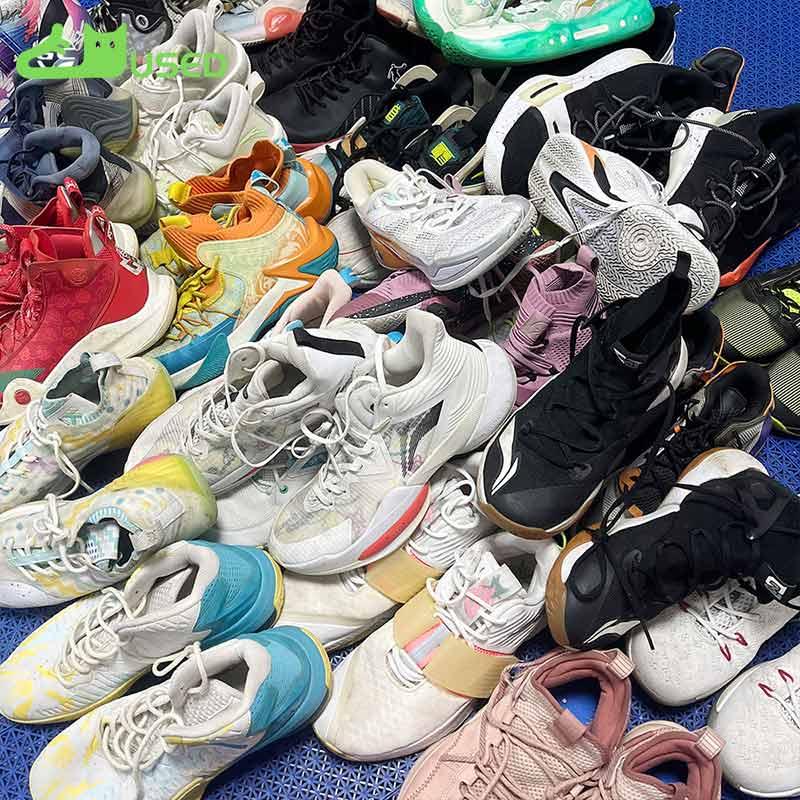
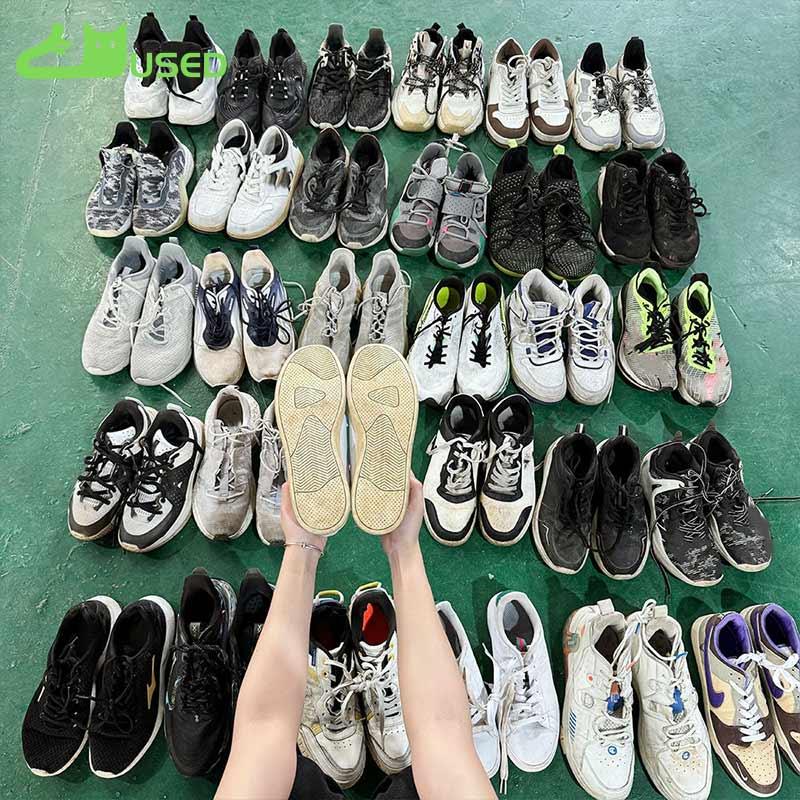
These library photographs are not examples of the three makers' code charts and do not show tested used pairs. Their purpose is to separate an observable outline from information that requires a readable marking. They establish neither width availability nor remaining running performance.
These are different information problems. Asking for another overall photograph may help none of them. A useful clarification names the missing field, so the reply can answer it directly instead of repeating that the shoes look roomy.
For used running shoes wholesale, specify whether you want an original width category or simply more information about the labels. For example, ask for identified women's wide-category options with their original codes retained, rather than an unspecified group of D shoes. This is an illustrative request, not a statement that such stock is currently available.
When discussing used sneakers, ask the quotation to distinguish the requested selection from the selection actually confirmed. The minimum order is one 20GP container. Size, grade and packing choices remain subject to the quotation; the width explanation establishes no container capacity, available ratio or guaranteed fit. Second hand sneakers without a confirmed width should not acquire one merely to complete a requested assortment.
No. In the adult conventions explained here, it means standard for men's sizing and wide for women's sizing. Establish the applicable category before translating it.
Not as one undifferentiated width description. Under the examples above, 2E means men's wide but women's extra wide. Preserve those distinctions.
Not by itself. Keep the length-size marking separate from the maker's width designation and check the model's applicable convention.
Not without supporting model-specific information. A missing, hidden or worn marking cannot by itself establish which width version was supplied.
No. They describe a sizing designation, not a fitting result or remaining performance. A resale description should keep those claims separate.
Before approving a width description, resolve three things together: the original code, the maker and model context, and the sizing category. Translate only what those details support. Ask for the missing category or label reading when necessary, and keep exterior measurements and personal fit outside that translation.

Direct Factory Supplier of Used Shoes For African Markets In China
 Tel: +8618606960861
 Email: info@usedshoeswholesale.com
 MP/WhatsApp: +8618606960861
 Manufacturer Address:Cizao Town, Jinjiang City, Quanzhou City, Fujian Province