Author:Used Wholesale Manufacturer TIME:2026-11-20
A small picture beside a strap and a dense black-and-white graphic across an upper create different looks, even when both are sold as patterned footwear. For a buyer selecting used kids sneakers, the useful question is not simply whether graphics are present. It is how much of the shoe they occupy, where they sit and whether the selection can include more than one kind of decoration.
The photographs here show localized motifs, lettering and busier patterned panels among other children's footwear. They support an appearance brief, not claims about named characters, printing methods or the contents of a future order. Begin with the visible arrangement and decide which differences would actually matter to the proposed range.
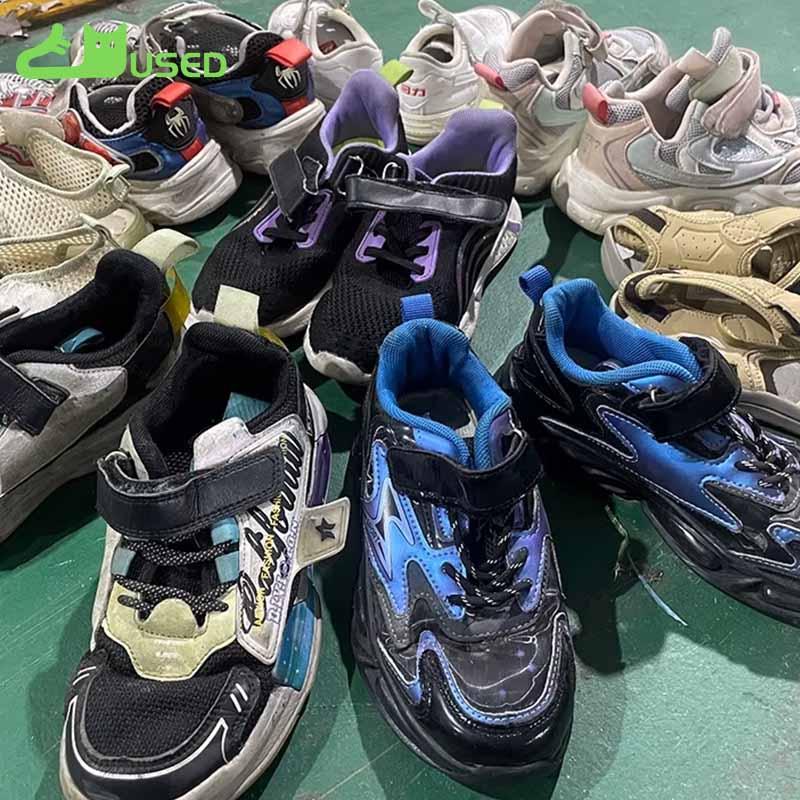
Look for an element the eye reads as a separate picture, word or emblem. In the front-left shoe, a light outlined detail sits against a darker background. That local feature is different from a design repeated across the upper. A brief requesting small motifs can therefore exclude a busy all-over print without requiring every shoe to be plain.
Describe the background as well as the motif. A pale picture on a dark panel may stand out more than a similarly sized tonal detail. If the buyer means discreet decoration, ask whether the concern is physical size, contrast or both. "Small" alone does not communicate how conspicuous the picture should look.
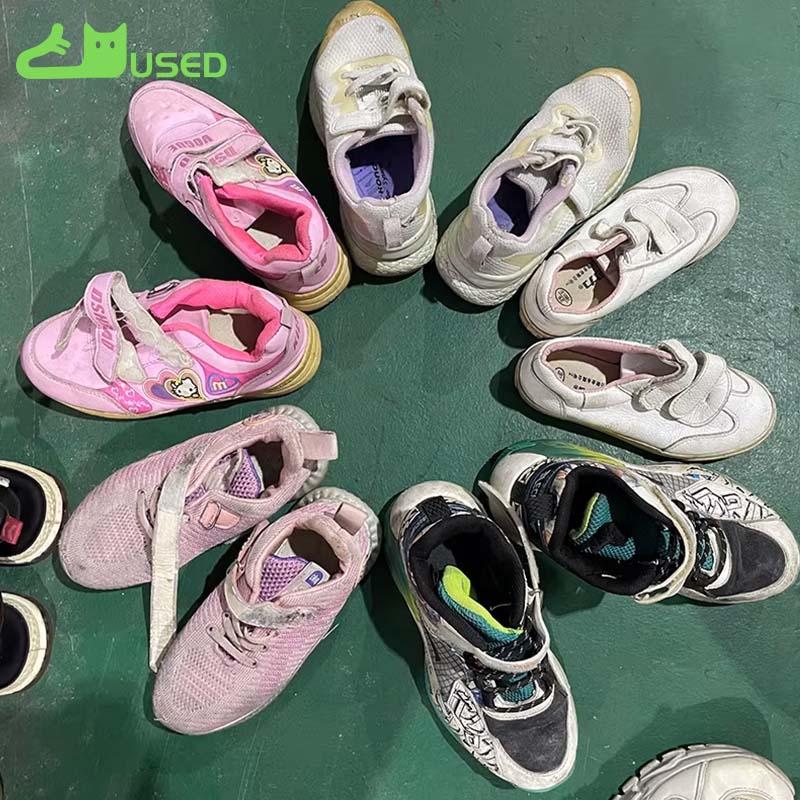
A patterned field contains repeated or closely distributed marks over an area, so the area reads as a texture or graphic surface rather than one isolated picture. In the wider display below, black-and-white graphic panels and rows of relatively plain-looking panels appear together. The group offers examples for discussing coverage, not a count of any available selection.

Keep a distinction between a patterned panel and a fully patterned shoe. A printed side can sit beside an unpatterned toe, tongue or heel. Calling that shoe all-over printed may exaggerate what is visible. For a buying brief, "graphics across the side panels, with a relatively plain toe" can be more useful than a single broad label.
Coverage does not require a made-up percentage. Use an agreed whole-pair reference to distinguish a local feature, one prominent panel and a broadly patterned upper. If a precise area boundary matters to the buyer, mark the relevant panels in the request rather than estimating hidden surfaces from a group photograph.
Front: a motif on the toe or strap can dominate the face-on view.
Side: a picture or lettering may be prominent when shoes stand in a row but less visible from above.
Rear: lettering or a heel detail adds another graphic area even when the front looks restrained.
These locations are choices, not quality grades. A buyer may accept lettering at the heel while wanting a plain toe, or prefer a single side motif to several small pictures spread across the shoe. Write the requested combination instead of approving each detail separately and discovering later that their combined effect is too busy.
Check the offered appearance with the normal closure position. A motif on a strap may occupy a different place when the strap lies open. This is about where the graphic is seen, not whether a lace is decorative or whether a fastener works. Those functional questions remain separate.
Use motif, lettering, outlined detail or patterned panel when those words describe what the photograph actually shows. A visible border does not prove that a picture is sewn on. Gloss does not prove that a panel is reflective. A graphic may look raised under one light without revealing its material or attachment.
If the buyer specifically excludes raised decorations, that becomes an additional construction question. Request a side-angle detail and an explanation of the actual feature before treating a flat-looking photograph as confirmation. Do not lift an edge, remove a fitting or alter the shoe just to make it match the brief.
Likewise, describe a cartoon-like picture without assigning it a franchise or a character name that the available information does not establish. The selection can be based on localized pictures versus dense patterns without making a claim about licensing, authenticity or which children will prefer the design.
| Requested look | What may fit | What needs a separate answer |
|---|---|---|
| A local focal detail | One main visible motif against comparatively plain panels | Whether lettering elsewhere counts as another prominent feature |
| Restrained graphic placement | Decoration limited to named areas, such as the outer side or heel | Whether a contrast-heavy motif is acceptable in that area |
| Broad graphic coverage | Several visibly patterned panels or a large continuous graphic area | Whether plain toe and heel panels are acceptable interruptions |
| Mixed graphic treatments | Local motifs and busier patterns described as separate options | Which alternatives the buyer accepts and what the supplier can actually propose |
A hypothetical request might accept localized pictures and heel lettering but exclude densely patterned toe panels. Another might welcome broad graphics while allowing different background colors. Neither is a rule for children's footwear generally. Each simply tells the supplier which visual combinations to show instead of replying with an undifferentiated mixed display.
For second hand sneakers, ask the supplier to identify which examples answer each requested look. Review the front, both sides and rear of those examples before confirming alternatives. Repeated views of the most decorated side can exaggerate coverage; one plain side can hide it. The decision should concern the complete visible exterior.
In an inquiry about used children's shoes, keep the graphic preference alongside, but separate from, sizes and condition requirements. The minimum purchase remains one 20-foot general-purpose container (1x20GP). Individual photographs clarify the requested assortment; they are not an offer to purchase single pairs.
Ask what can be supplied in the current quotation, including any limitations on graphic combinations. Existing photographs of second hand shoes do not reserve those designs or guarantee a particular proportion. If the available proposal differs, decide which graphic preference may change instead of silently replacing the original request with "assorted colors."
No. One picture can be a focal motif, even when prominent. An all-over description concerns coverage across the upper and should not be inferred from a single decorated panel.
Yes. Contrast and placement can make a small detail conspicuous. Specify whether the preference concerns size, contrast or location rather than relying on the word discreet.
No. The outline is visible, but the attachment is not established by that fact. Obtain a suitable detail and confirmation when construction affects selection.
Yes. A buyer can accept words at the heel while excluding pictures on the toe, for example. State both preferences so that one does not accidentally cancel the other.
No. Graphic coverage is an appearance choice. It does not establish a wearer category, customer preference or sales forecast.
Choose the amount and placement of graphics before discussing substitutes. A brief that names focal motifs, patterned panels and acceptable interruptions is easier to answer than one asking only for attractive designs. Confirm the proposed exterior as a whole, leaving attachment methods, wearer labels and current availability to their own supported answers.

Direct Factory Supplier of Used Shoes For African Markets In China
 Tel: +8618606960861
 Email: info@usedshoeswholesale.com
 MP/WhatsApp: +8618606960861
 Manufacturer Address:Cizao Town, Jinjiang City, Quanzhou City, Fujian Province