Author:Used Wholesale Manufacturer TIME:2026-08-11
Warm-market slipper demand evidence
The title links used slipper demand with warm-climate markets, but climate alone cannot prove sales. A wholesale buyer should test current search and inquiry language, local channels, permitted constructions, price bands, replacement behavior, marked-size needs, seasonality and receiving results. Demand becomes a buying signal only when it connects to a named market, period and released product lane.

Autocomplete, related searches and repeated buyer wording can suggest questions worth investigating, but they do not provide sales volume. Supplier inquiries reveal requested products but not completed resale. Actual buyer records may show results for one channel and period without representing a whole country.
Label every signal by source, date, geography, language and decision use. Avoid turning broad phrases such as warm climate into a permanent demand forecast.
question signal only
requested current scope
receiving and allocation
buyer record and period
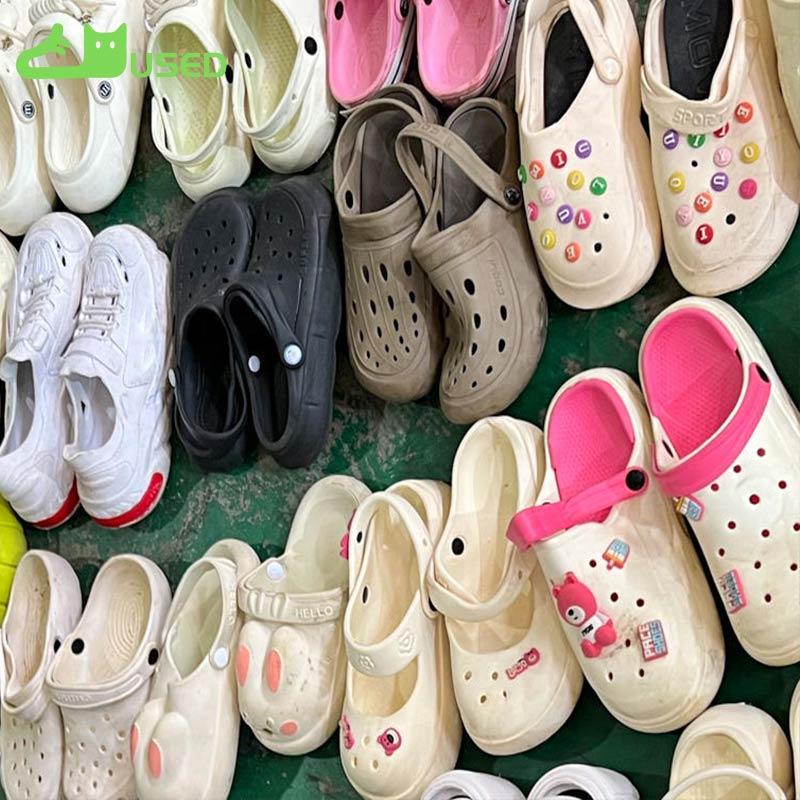
Separate slides, flip-flops, closed slippers and other approved forms. Each has distinct band, post, seam, sole and footbed checks. A broad used slippers query cannot reveal which construction, material or presentation lane the buyer needs.
Ask for current-lot counts after pair, attachment, hygiene and preparation holds. The physical product must match the signal before the buyer uses it to size a trial.
band and sole
post plug and sole
upper seam and lining
buyer-defined route
The matrix keeps a signal, product record and buyer decision distinct.
| Evidence level | What it supports | What it cannot prove |
|---|---|---|
| Search | Question and wording selection | Sales volume |
| Inquiry | Requested product fields | Completed demand |
| Trial | Receiving and allocation result | National preference |
| Sales record | Named channel and period | Permanent future demand |
Increase confidence only when better evidence answers the same product and market question.
Identify general retail, market stall, discount, institutional, hospitality, online or other channels only when they are relevant to the buyer. Record presentation, quantity, replacement and price boundaries for each. Do not claim that all warm markets share the same habits.
Use channel feedback to decide whether a construction belongs in core, specialist, reprice or hold inventory. Preserve the current decision date because channel conditions can change.
routine accepted lane
narrow form or size
lower presentation
demand not confirmed
Read compatible marks on released pairs and retain their visible system. Cross-tab by construction, material and size where useful. Do not convert without evidence or infer a universal regional curve.
Choose a trial that can expose concentration, attachment failures, hygiene work and channel fit. The supplier returns actual cells; the buyer records approved substitutions before packing.
released construction
visible marked sizes
when inspection differs
approved variance
Record product, freight allocation, import, receiving and preparation inputs with dates and sources. Keep bales, kilograms and pairs separate. Calculate operational cost on accepted or sale-ready pairs using documented conversions.
Run a weaker-yield or slower-allocation scenario where evidence is limited. It supports a quantity decision but does not promise resale speed or margin in a warm market.
quoted basis
released pairs
local task inputs
labeled planning case

At receiving, compare construction, attachment, footbed, marked-size and packing fields. Then record allocation and sales feedback under the buyer's own channels where available. Keep physical variance separate from demand variance.
Revise the next matrix by named field. A stronger or weaker trial result applies to the measured scope and period; it cannot validate the entire climate-based title.
source versus receiving
channel placement
dated result
next trial change
Send the named country, channel, permitted constructions, marked-size cells, attachment and footbed limits, preparation policy, commercial unit and packing requirements. Ask for current-stock counts, ordinary-unit evidence and every unsupported cell. Keep search language as the reason for asking, not proof that the answer will be positive.
Assign owners and dates to missing cost, route, inspection and buyer fields. Compare supplier responses on the same matrix, then size a trial that can test physical yield and allocation. A broad market statement should never substitute for a completed response sheet.
country channel and period
released construction cells
current lot and sample
owner and due date
No. Test a named buyer, country, channel, period and released product matrix.
No. They are wording and demand signals, not a volume measurement.
Construction, attachment, footbed, marked size, condition and preparation.
Use a controlled trial when physical yield or channel fit is not yet reproducible.
Use receiving and channel records to revise one named field at a time.
Demand is a dated evidence chain from signal to released product and buyer feedback. The used slippers wholesale category sets the product family; a named market trial decides the current buying quantity.






Direct Factory Supplier of Used Shoes For African Markets In China
 Tel: +8618606960861
 Email: info@usedshoeswholesale.com
 MP/WhatsApp: +8618606960861
 Manufacturer Address:Cizao Town, Jinjiang City, Quanzhou City, Fujian Province